
Thinking of Vinyl Flooring? 6 Myths that May Lead to Expensive Regrets
Vinyl flooring promises a lot: the look of wood, a softer feel underfoot, and a more wallet-friendly renovation—but go in with the wrong expectations, and that “safe” choice could become an expensive regret.
By Gwyneth Goh -
Share this article
This article is part of Home & Decor’s monthly editorial topics series — crafted around real, current problems that many Singaporean homeowners face. Jam-packed with personal recounts, opinions, and expert takes, we hope that these weekly pieces will inspire you, and bring you solutions that you can take into your own home.
May’s topic: ‘Designing for Real Life’. Article 2/2.
Vinyl flooring has become a near-default choice in many Singapore renovations, especially for homeowners chasing the warmth of wood without the cost, upkeep or installation demands of natural timber. It is softer and quieter underfoot than tiles, visually versatile, and often kinder to renovation budgets, making it an easy sell for first-time homeowners and resale buyers alike.
But popularity has also created a fair number of assumptions.
“It’s easy to fall in love with a wood grain you saw on Instagram, but vinyl is a functional product,” says Alan Toh, co-founder and managing director of local flooring company Floor Xpert. “It has to match your home’s habits.”
That practical lens is echoed by interior designer Gary Chong of Ovon Design, who says vinyl remains one of the most commonly requested flooring options among his clients, particularly among younger homeowners balancing comfort, aesthetics and budget.
From “waterproof” claims to expectations around durability and lifespan, many of the most expensive regrets come not from vinyl itself, but from choosing the wrong product, installing it badly, or using it in spaces it was never meant for. We asked both experts to unpack the six myths homeowners commonly embrace.
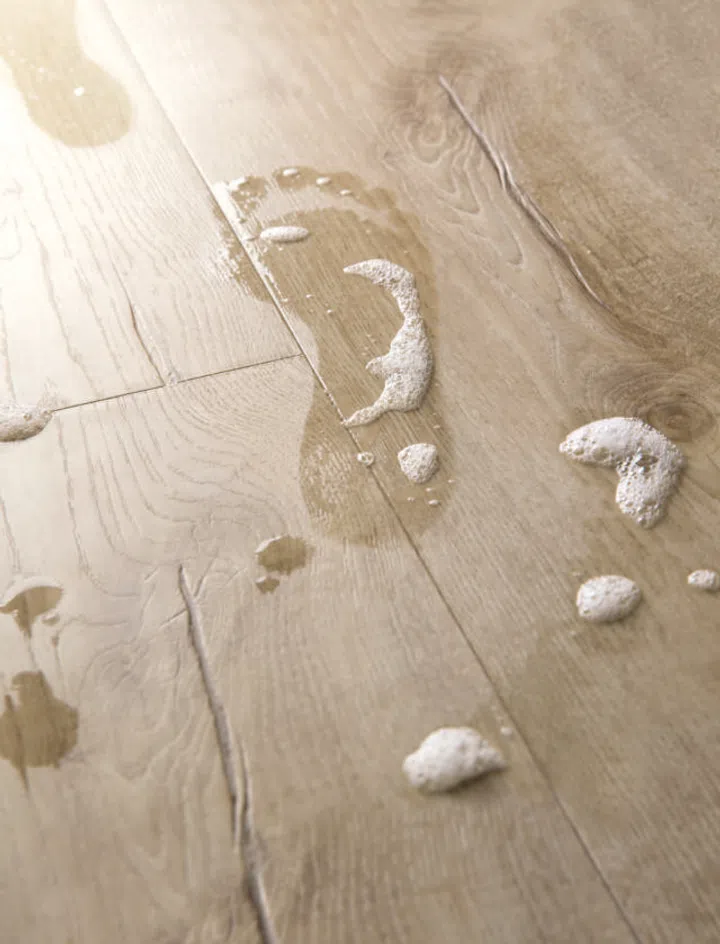
Everyday spills are usually manageable on vinyl, but prolonged moisture or water that seeps beneath the surface is where problems can begin.
Myth 1: Vinyl flooring is waterproof, so spills and moisture are not a problem
Vinyl’s water resistance is one of its biggest selling points, but that does not mean every vinyl floor is immune to moisture-related problems.
“The term ‘waterproof’ is used a lot in marketing, but from a homeowner’s perspective, it’s important to understand what that actually covers,” says Alan. “The vinyl material itself is water-resistant and won’t absorb moisture like natural wood. However, water can still seep through the gaps or joints if the locking system allows it, and over time, it gets trapped beneath the flooring.”
That distinction matters more than many homeowners realise. A spilled drink wiped up quickly is one thing; repeated exposure to moisture, standing water, or leaks is another. Over time, trapped moisture beneath the flooring can lead to mould issues, damaged subfloors, or planks lifting at the seams.
Gary of Ovon Design says he would be cautious about specifying vinyl in certain kitchens, particularly “if the homeowner has a habit of washing the floor after heavy cooking”. Explaining why, he adds: “Vinyl is water resistant, not waterproof, so normal mopping is fine but once you pour water to soak and wash, you may damage the vinyl and void their warranty.”
Alan offers a similar caution around prolonged exposure. “If water is just left sitting there, or if it repeatedly seeps beneath the surface, underlying issues can still develop over time. So, basic good maintenance is still essential.”
Verdict: Vinyl may work well in many homes, but “waterproof” should not be mistaken for licence to treat it like a fully wet-rated surface.

Vinyl is often chosen not just for affordability, but for the comfort and warmth it brings to busy family homes.
Myth 2: Vinyl flooring is always the cheapest flooring option
Vinyl often gets positioned as the budget-friendly default, but the cheapest upfront option is not always the cheapest decision in the long run.
“In your projects, how often do homeowners opt for vinyl flooring?” Gary estimates that “60–70% of homeowner requested for vinyl flooring”, particularly among “mostly BTO young couples”.
Cost is often the deciding factor. “Mostly is budget,” Gary says. “Secondly is the aesthetic look of vinyl, which makes the house feel more welcoming and warm. Some clients choose vinyl probably to save some cost as they will not be staying for too long.”
Alan agrees that vinyl remains appealing from a budget perspective. “When we talk about cost, vinyl is obviously a very attractive entry point. That’s why it’s such a popular pick for most renovations—you get a great aesthetic without a massive upfront cost.”
However, upfront affordability does not always equal long-term value.
“But I always advise homeowners to think about the long-term value, not just the immediate savings,” Alan says. “If you are looking at a space that is going to see heavy wear and tear, or an area that gets a lot of environmental stress like a wet kitchen, it actually makes more sense to spend a bit more upfront on tiles. Tiles are going to give you that indestructible longevity in those tough spots, so you don’t have to worry about replacing them a few years down the road.”
Gary takes a similar view, noting that material choices should depend on how a space is actually used. “When clients are open to alternatives, I usually suggest materials like tiles for durability, or microcement depending on the space, maintenance preference, and overall design style.”
Verdict: Vinyl can absolutely be a cost-effective choice, but “cheap” should not be the only criterion.
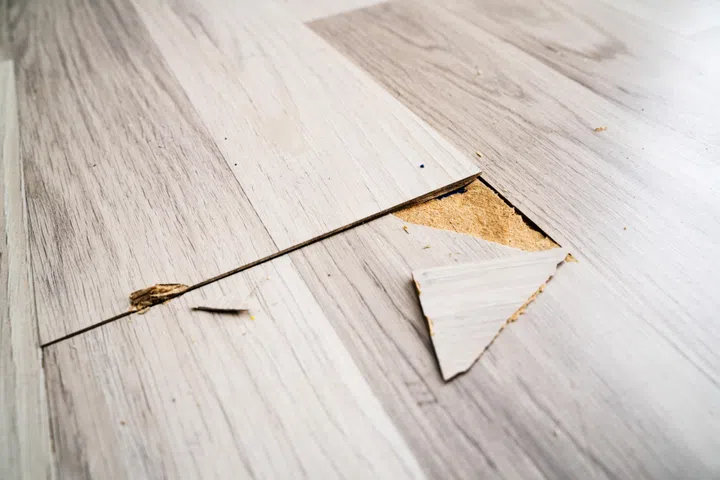
Vinyl holds up well to everyday life, but scratch-resistant does not mean damage-proof—especially when heavy furniture is dragged across the surface.
Myth 3: Vinyl flooring is basically indestructible
Vinyl is often marketed as a durable, family-friendly flooring option, and it performs well in many homes—but durable does not mean damage-proof.
“Vinyl is scratch-resistant, not -proof,” Gary says plainly.
This is one of the more common issues he observes during move-ins, when “some movers tend to drag heavy furniture and cause scratches”. The upside, he notes, is that “with the clipping system, it’s easy to do replacement to the affected piece.”
Alan shares a similar caution. “Realistically, you can expect vinyl flooring to last anywhere from about five to ten years. But a lot of that just comes down to your daily lifestyle, whether you have pets running around, heavy furniture shifting, or how much direct sun the room gets.”
More serious problems can also show up over time. “That’s when you might see an accumulation of deep surface scratches, the edges of the planks starting to lift up or separate, or when the floor just doesn’t feel stable and flat to walk on anymore,” Alan says.
“The main thing to keep in mind is that vinyl isn’t like natural wood or parquet. With real wood, if it gets scratched up, you can sand it down and re-varnish it. You can’t do that with vinyl. Once that top wear layer is worn through, you can’t restore it,” he adds. “However, the big advantage here is the ease of replacement. Unlike hacking up tiles or sanding down wood, replacing vinyl is a much faster and cleaner process.”
That said, durability is still one of vinyl’s strongest selling points when expectations are realistic. Gary points to its softer, more forgiving feel in daily use: “If you accidentally drop something, there’s a better chance it won’t crack compared to dropping it on tiles.”
Verdict: Vinyl is resilient enough for everyday living, but it still relies on proper care and maintenance.
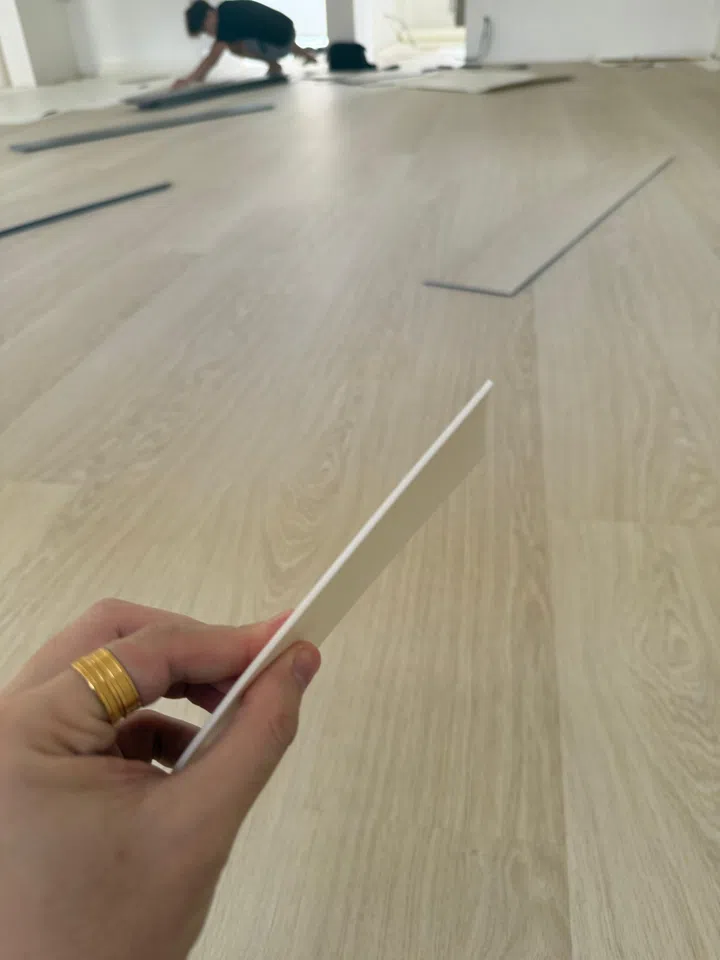
Vinyl may look deceptively similar at first glance, but construction quality, thickness, locking systems, and installation can make a dramatic difference to long-term performance.
Myth 4: All vinyl flooring is essentially the same
At a glance, many vinyl floors can look remarkably similar, but what lies beneath the surface can make a significant difference to how they feel—and how well they perform over time.
What often gets overlooked, Gary says, are the technical details that shape long-term performance. “Homeowners often focus on the colour and design, but overlook factors like board quality, thickness, installation workmanship, and their clipping system.”
That becomes especially noticeable after move-in, when day-to-day comfort comes into play.
Part of the confusion comes from the jargon homeowners encounter while shopping. Alan notes that terms like LVT, SPC and Hybrid may sound technical, but they simply describe different constructions. Traditional vinyl tends to be softer and more flexible, while more rigid options offer greater structural stability but can feel noticeably harder underfoot.
That becomes especially noticeable after move-in, when day-to-day comfort comes into play.
Gary describes vinyl as being “softer underfoot”. “It has a bit of cushion, so standing for long periods (like in the kitchen) feels less tiring.” It also offers a “warmer feel”. “Unlike tiles, vinyl doesn’t feel very cold in air-conditioned rooms or mornings.”
Noise can differ too. Gary notes that vinyl is generally “quieter when walking”, with footsteps and dragged chairs producing less noise, “especially with some foam underlay.”
Installation quality plays a big role here too. Alan adds, “After moving in, it’s usually the feeling underfoot that surprises them. People love that vinyl is softer than tiles, but depending on the subfloor underneath, it can feel less ‘solid’. Sometimes there’s a slight bounce or a hollow sound when walking barefoot, something you’d never notice just looking at a sample in the showroom.”
In other words, two vinyl floors that look similar in a showroom may end up feeling completely different once installed.
Verdict: Choosing vinyl based purely on looks or price can be a costly shortcut—construction, installation and underfoot feel matter just as much.
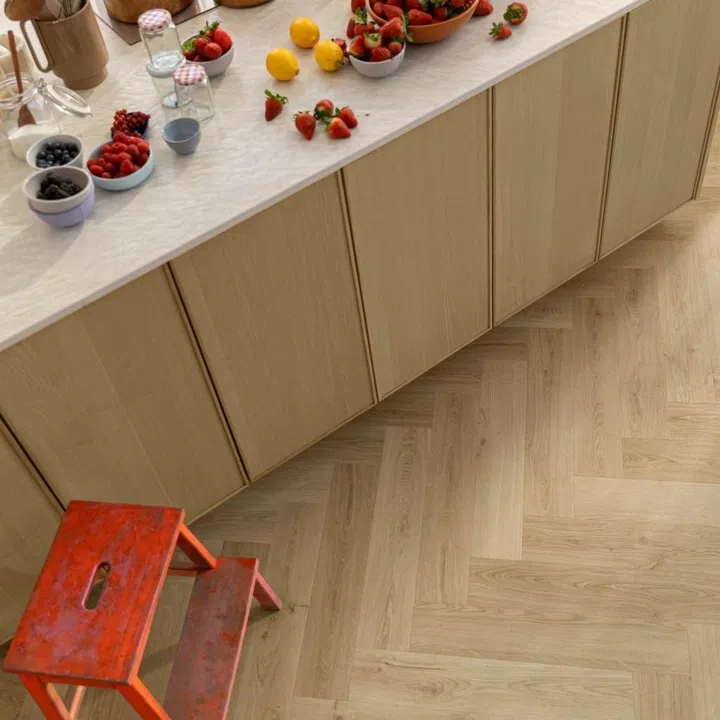
Vinyl can work beautifully in kitchens and high-use spaces—but long-term performance depends heavily on daily habits, exposure conditions, and choosing the right product for the space.
Myth 5: Vinyl works everywhere in the home
Vinyl’s versatility is part of its appeal, but not every space places the same demands on flooring.
Gary says material selection should always be tied to how a homeowner actually lives, not just how a product looks in a showroom. While he regularly recommends vinyl for living areas and bedrooms, spaces exposed to heavier moisture or harsher conditions deserve more thought.
Alan points to Singapore’s climate as a factor many homeowners underestimate. “Singapore’s weather is definitely a huge factor. The heat and direct sunlight here can be quite unforgiving, especially with that strong afternoon sun. If your living room gets baked every day, the prolonged heat can cause the planks to expand, creating slight warps or gaps, along with some fading.”
“We often see these effects near balcony doors, window edges, or unshaded living areas,” he adds.
Daily habits matter too. A flooring material that performs beautifully in a dry bedroom may not hold up the same way in a space that sees frequent soaking, repeated wet cleaning, or more aggressive wear.
That does not make vinyl a poor choice—it simply means placement matters.
Verdict: Vinyl is versatile, but not universally foolproof; where and how you use it can make all the difference.
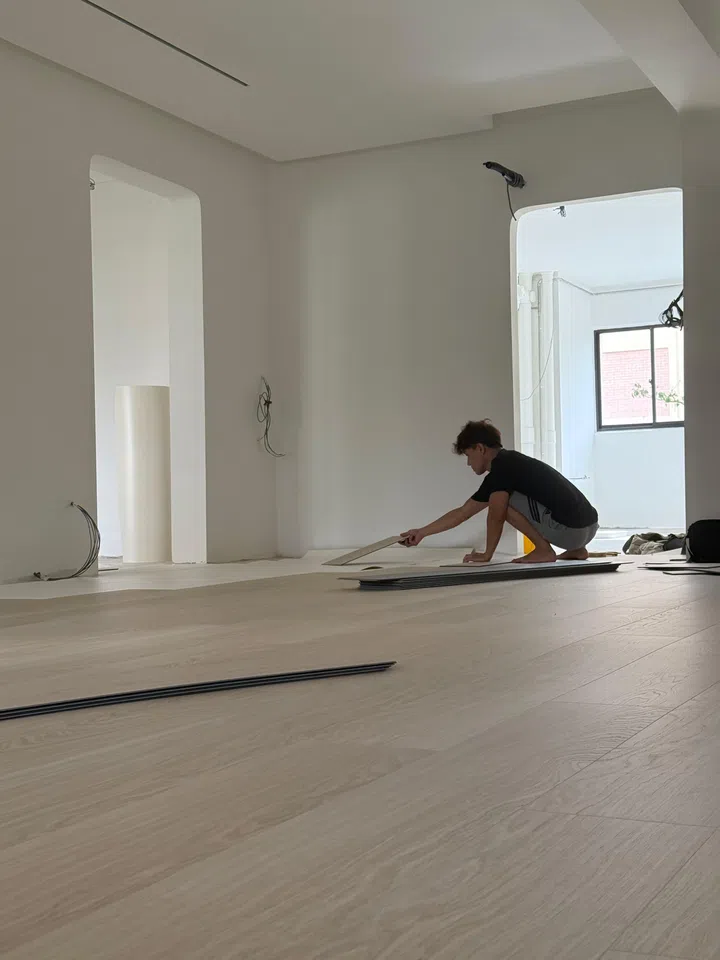
What homeowners do not see matters most: subfloor prep and installation workmanship can make or break a vinyl floor’s long-term performance.
Myth 6: If it looks good on day one, the job was done right
A freshly installed vinyl floor can be deceptively reassuring. The planks sit neatly in place, the joins look clean, and everything appears exactly as promised.
But some of the most expensive problems only show up only sometime after you move in.
“Honestly, I’d say installation and the condition of the subfloor make up at least half the success of your new floor,” says Alan. “It’s easily the most overlooked part of the whole renovation process.” This is because careless installation can impede even the best vinyl flooring.
“You can buy the most premium, high-end vinyl on the market, but if the ground underneath isn’t prepped right, the floor is going to underperform,” Alan says. “We usually lay vinyl right over existing tiles or cement screed. The biggest mistake we see is people rushing this step—skipping the proper levelling and just laying the planks straight over an uneven surface.”
“The dangerous thing is it might look perfectly fine on day one,” he says. “But a few months down the road, as you walk on it every day, that’s when the real issues start to surface. You’ll start feeling the dips, hearing those hollow clicking sounds, or worse, seeing the joints start to separate.”
This is something Gary flags too, noting that “installation workmanship” is one of the most commonly overlooked factors when homeowners are choosing vinyl flooring.
Alan sums it up: “Homeowners never really see this part of the job, but it is the absolute foundation of making sure your floor lasts for the long haul.”
Verdict: A flawless handover does not guarantee a flawless installation—what lies beneath matters just as much as what you see.
The bottom line? Vinyl flooring can absolutely work brilliantly in the right home, but the best outcomes come from matching the product to how you actually live.