
Your HDB Window Guide: Maintenance, window films, and treatments that actually work
From failing hinges to harsh west sun, this practical guide breaks down how HDB windows really affect comfort—and what to fix, film or furnish.
By Gwyneth Goh -
Share this article
This article is part of Home & Decor’s monthly editorial topics series — crafted around real, current problems that many Singaporean homeowners face. Jam-packed with personal recounts, opinions, and expert takes, we hope that these weekly pieces will inspire you, and bring you solutions that you can take into your own home.
April’s topic: ‘Living in the Tropics’. Article 4/5.
By mid-afternoon, the light is steady and constant. In many HDB flats, especially older ones, it comes in through windows that were installed years ago—often without much thought to heat, glare, or long-term performance.
Over time, these same windows start to show their limits. Rooms feel warmer than they should, glare becomes harder to control, and small issues like worn seals or loose fittings begin to surface. What seems like a minor detail can end up affecting comfort, energy use, and even safety.
This is where understanding how your windows perform matters. From basic maintenance to window films and everyday treatments, the right decisions can make a noticeable difference to how your home feels.
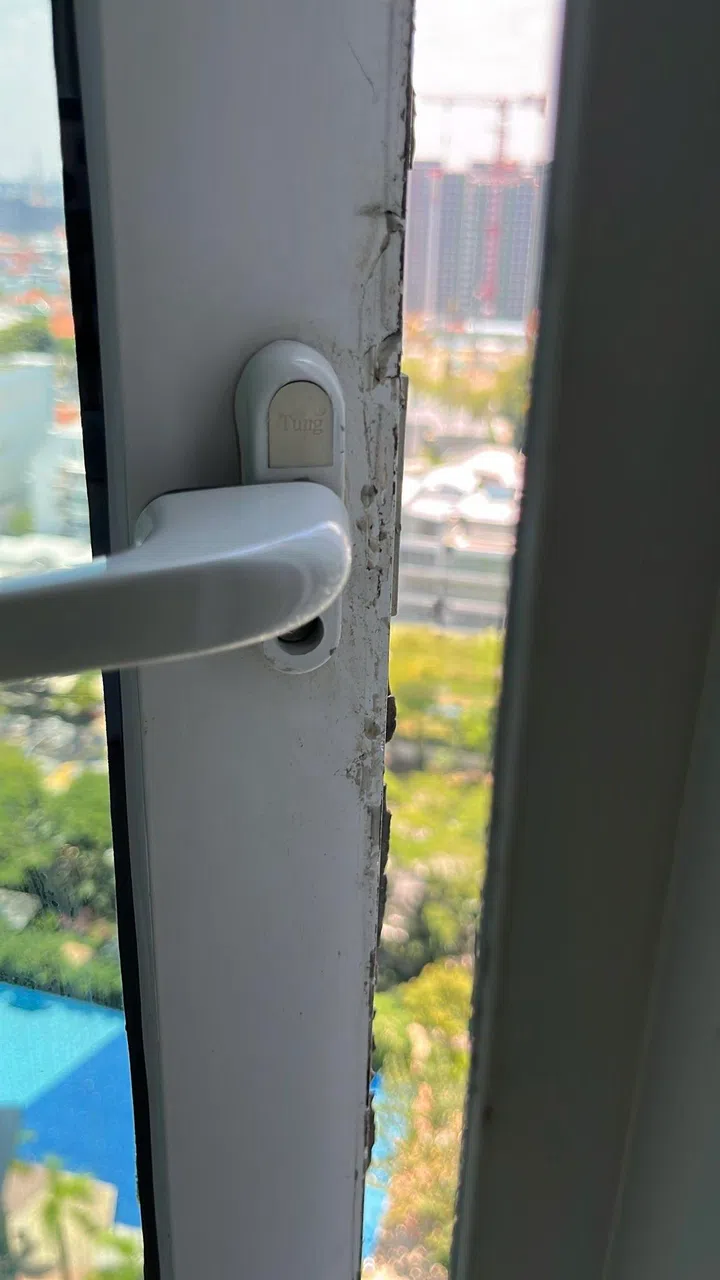
Wear around handles and frames is common in older windows—early signs that fittings and seals may be failing.
1. When to address windows in your renovation plan
For interior designer Don Wong of Sqm2, window-related problems become apparent from the initial site visit. “Typically, windows come into the conversation quite early, especially when homeowners first take over their new place and notice that the existing windows are old or have worn-out parts,” he says.
In older flats, these issues are rarely isolated. Handles loosen, rubber seals harden and crack, and hinges begin to fail after years of use. While some of these may seem minor, they can affect everything from how securely a window closes to how well it keeps out heat and rain.
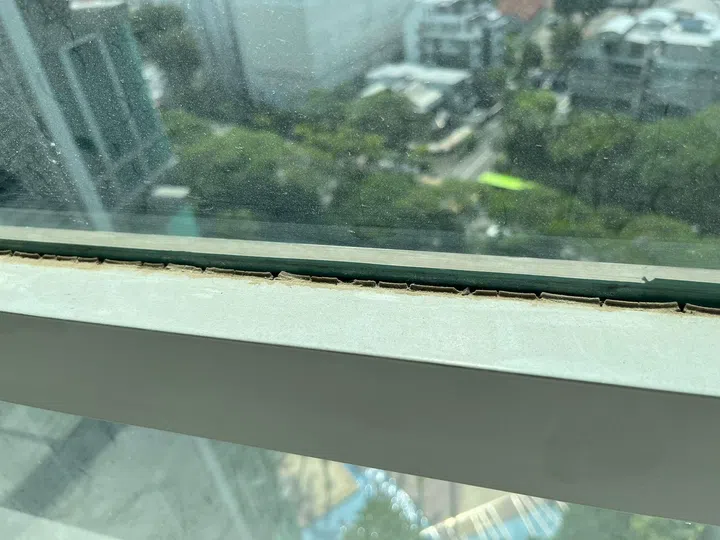
Deteriorating seals can affect how well a window keeps out heat, rain, and drafts over time.
This is why, for older homes, window decisions are often best made upfront. “If I observe that the window condition is not ideal, I will usually recommend considering a replacement,” Don explains. “This helps avoid potential issues later on and ensures the windows align better with the overall renovation plan.” Changing them later, he adds, “will create a lot of dust and mess.”
The implication is a practical one: windows are not just a finishing detail, but part of the renovation strategy itself.
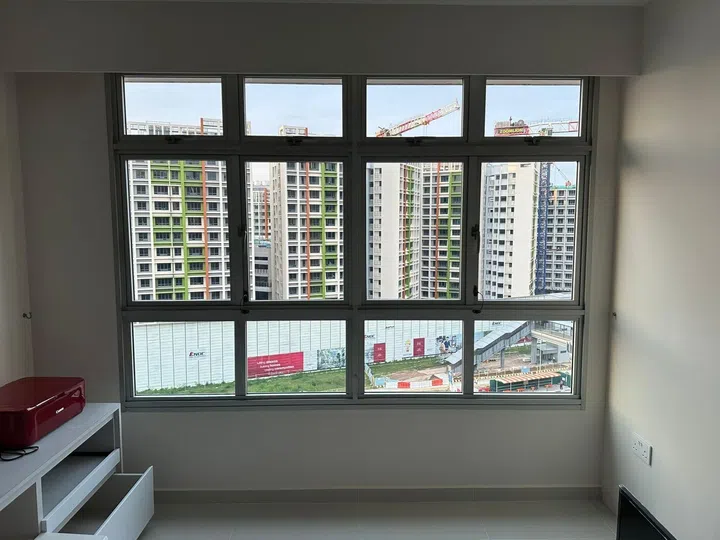
Strong daylight from standard HDB windows can quickly translate into heat and glare, especially in units exposed to direct sun, making shading and control essential.
2. How windows shape heat, glare and airflow
Beyond maintenance, windows are also the primary entry point for heat. In Singapore’s climate, this becomes most obvious in west-facing units, where afternoon sun can turn interiors noticeably warmer.
Don notes that homeowners frequently turn to window treatments as a first response. “If the unit is west-facing, I will usually suggest adding solar film to reduce heat and glare,” he says. “On top of that, we usually recommend adding curtains or blinds for additional control, especially during the hotter parts of the day.”
Beyond choosing the right BTU capacity for your air-conditioning system, ventilation also plays a big role. However, options are often limited. “There is not much layout change for HDB windows, as most of them are standard and we can’t modify them,” Don explains.
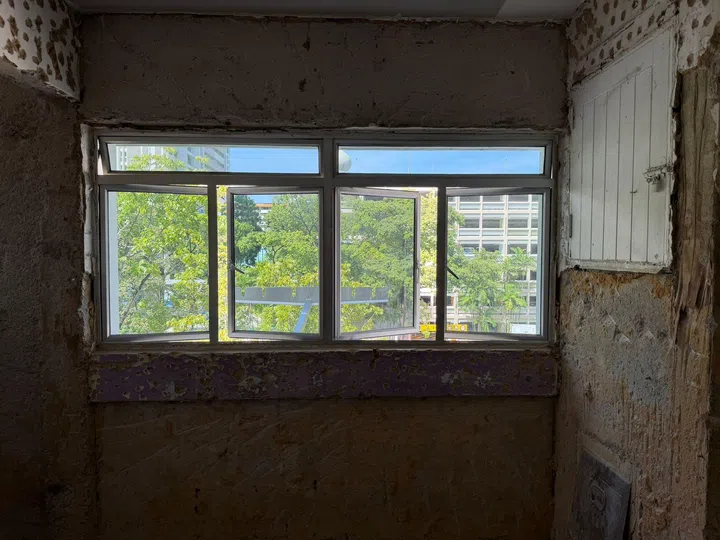
Expansive windows brighten interiors but also expose the home to direct sun, where heat and glare become harder to ignore.
One workaround is to introduce a small top panel that can be left open. “If you want better ventilation, you can consider a small top panel so you can keep it open when you are not at home, while keeping the main window closed,” he says.
That said, this comes with trade-offs. “Personally, I still prefer full-height windows without splitting into top and bottom panels, as it looks cleaner,” Don adds. For his own home, he took a different approach: “I installed a mesh to prevent insects from coming in. This way, I can keep the window open for ventilation and to dry my laundry at the same time.”
But not all solutions work in the same way—and this is where misconceptions often arise.
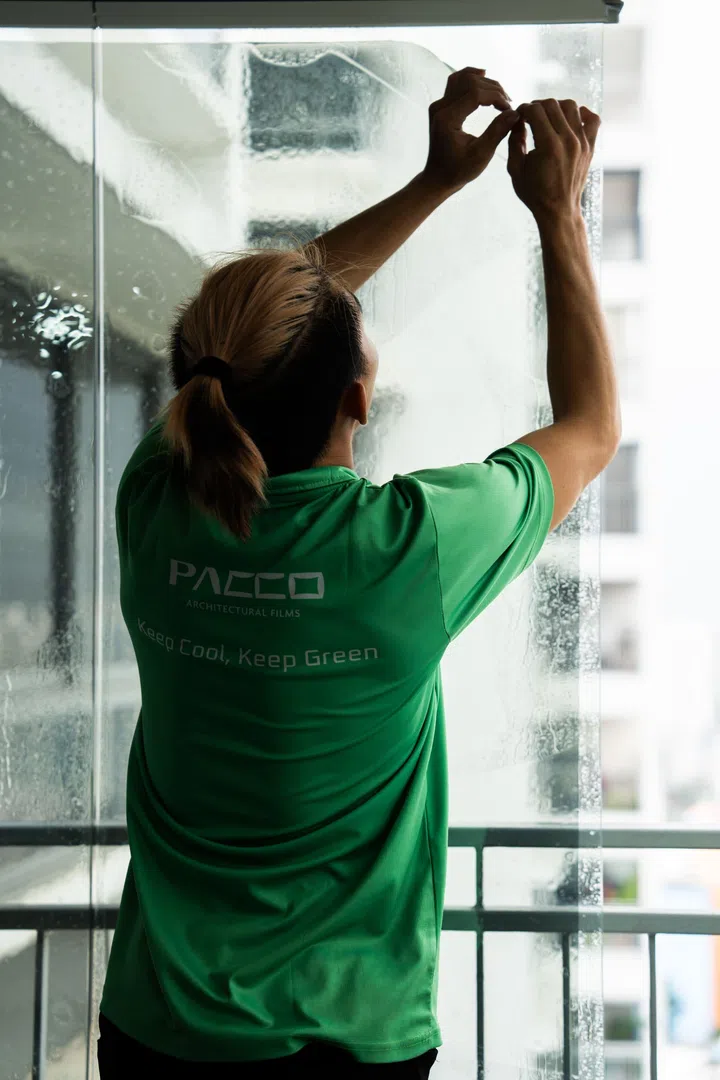
Applying solar film directly to the glass allows heat to be managed at the source, before it builds up indoors.
3. How to choose the right window film (and avoid common mistakes)
Window film is often marketed as a quick fix for hot interiors, but its effectiveness depends on understanding what it actually does. All solar films are window films—but not all window films are solar films designed for heat reduction. Some window films simply darken or tint the glass, while solar films are designed specifically to reduce heat and glare.
Chris Lim, Managing Director of Pacco, a local provider specialising in architectural window films, says this is one of the most common misconceptions. “Most people think it’s just ‘darker glass = less heat’. That’s not accurate.”
Instead, it comes down to how the film interacts with solar energy. He explains: “What solar films do is reflect part of the solar energy away, absorb part of it, and reduce the amount that passes through the glass. So instead of heat entering your space, it gets reflected out or dissipated on the glass surface. That’s why you can still have clear visibility, but much lower heat.”
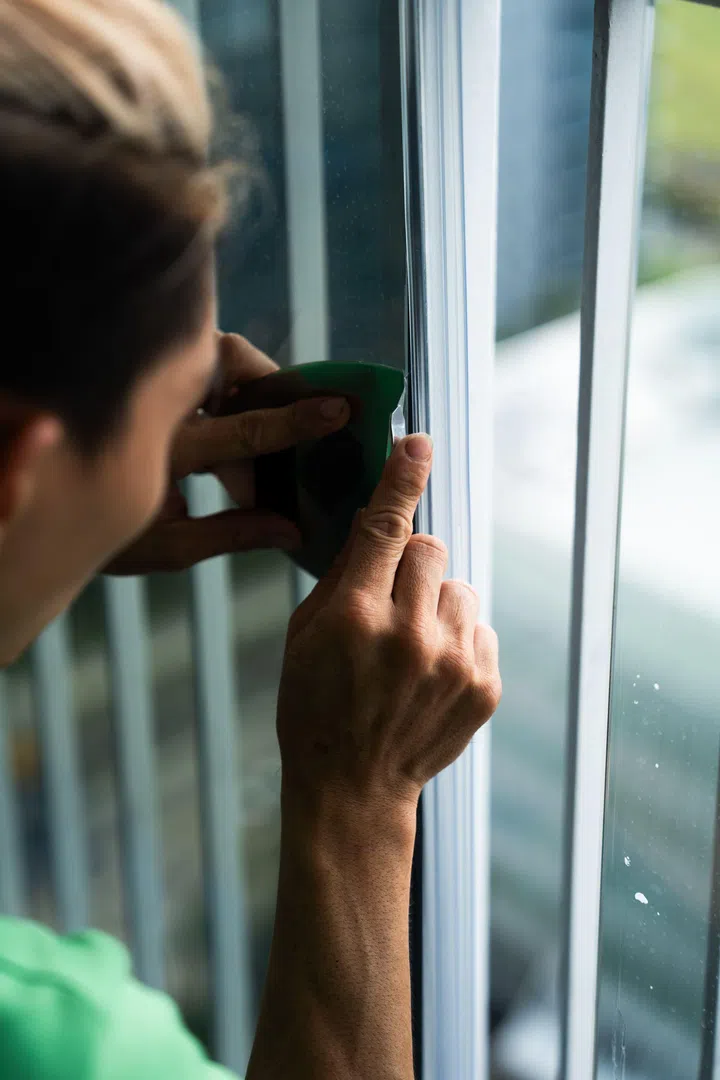
The performance of a window film depends on its material and application, not just how dark or reflective it appears.
This also means different films serve different needs. “If you have privacy issues, we recommend a darker tinted film for daytime privacy. If you have heat issues and want clear films, we recommend our sputtered films that effectively reflect heat while still maintaining clear views.”
For homeowners, the takeaway is straightforward: window film is not a one-size-fits-all solution, and choosing the right type depends on whether the priority is privacy, heat reduction, or both.
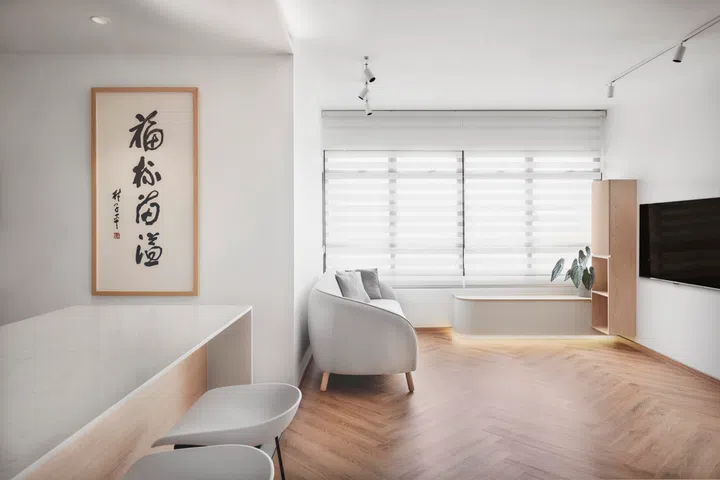
Blinds act as a second layer—filtering light, reducing glare, and giving homeowners control over brightness throughout the day.
4. What actually works: layering window film, curtains and ventilation
By this point, it becomes clear that no single solution solves everything. Windows affect heat, glare, ventilation, and privacy—and each of these needs to be managed differently.
Window film, for instance, works at the source. Chris describes it as the first line of defence, since solar films reduce the amount of heat entering through the glass itself before it has a chance to build up indoors. While this helps with heat, it doesn’t replace the need for shading or privacy.
This is where curtains and blinds come in. They act as a second layer, limiting the heat that still makes it through the glass. They also give homeowners control over brightness and visibility throughout the day, especially during peak afternoon sun.
Don notes that the choice between curtains and blinds often depends on the window type and how the space is used. Full-height windows tend to suit curtains, which create a softer, more cohesive look. “For standard HDB windows, especially corridor-facing units, blinds are a good choice,” he says. “They are easy to maintain, look neat, and still allow natural light in while giving privacy and a modern feel.”
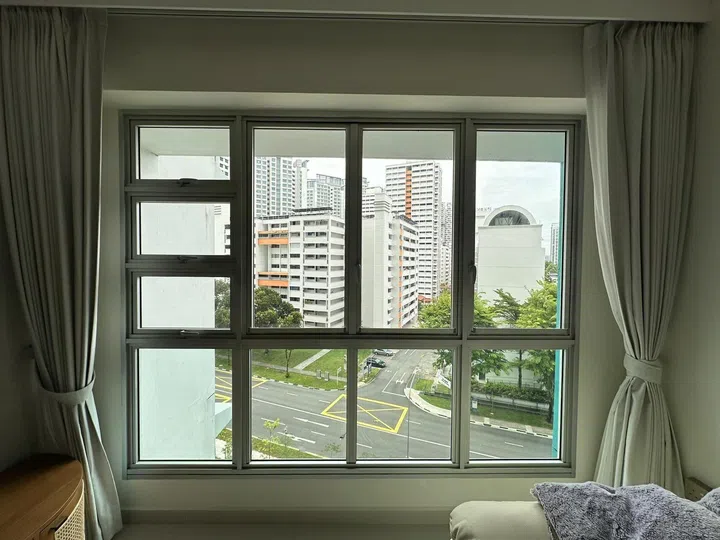
Curtains add a secondary layer of control—softening glare and improving privacy, while window configurations like top panels still allow for ventilation when needed.
Ventilation is another piece of the puzzle. While HDB window configurations are largely fixed, small adjustments—such as top panels or keeping windows open with insect mesh—can improve airflow and make spaces more comfortable for everyday use.
Taken together, these layers work differently but complement one another. Film reduces heat at the glass, curtains and blinds manage light and privacy, and ventilation helps regulate airflow. Together, these decisions result in a home that stays bright, usable, and comfortable throughout the day.
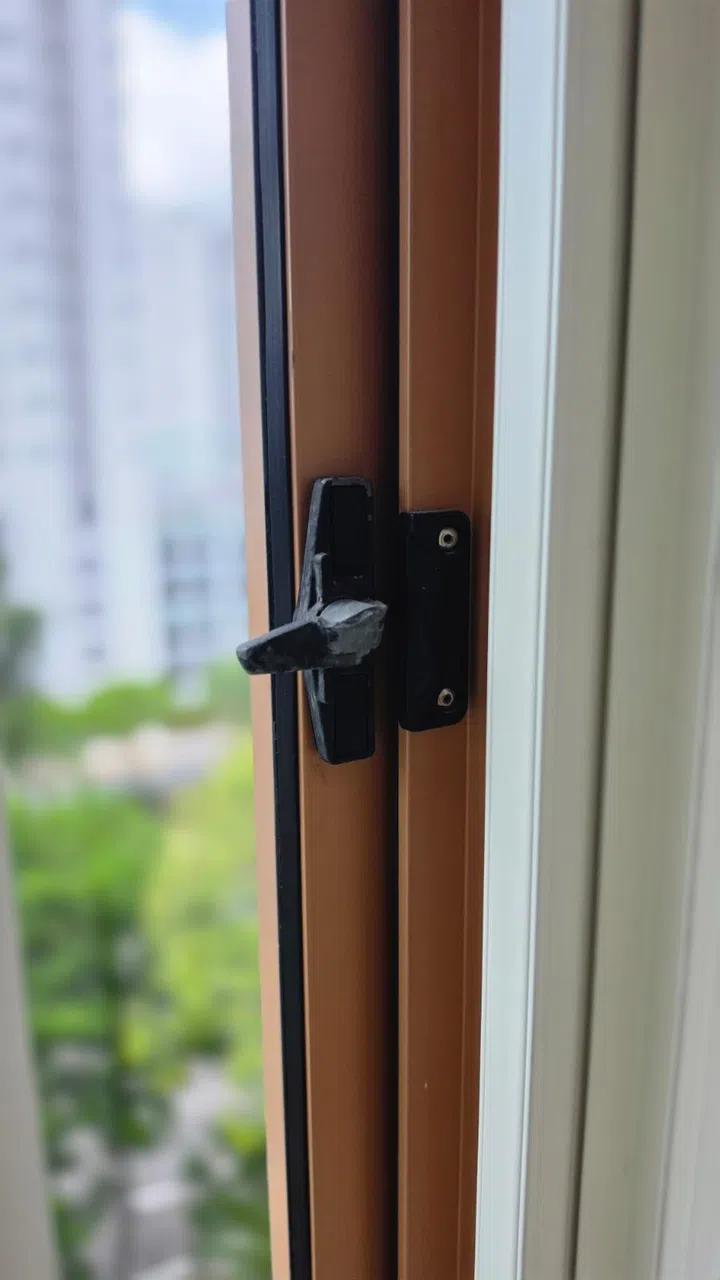
A loose or worn handle is often the first sign of a window under strain—small issues that can affect how securely it closes over time.
5. How to spot window problems early (and when to act)
In many HDB flats, window issues don’t appear suddenly—they build up through daily use. A panel that no longer glides smoothly, a handle that feels loose, or hinges that begin to resist are often the first signs of wear.
From their work across older homes, the team at ZGH Aluminium, a BCA- and HDB-certified window contractor in Singapore with over 19 years of experience in installation and replacement, notes that the most common problems are “broken hinges, broken handles and faulty sliding window rollers.” These tend to surface gradually, but can affect how securely a window closes and how safely it operates over time.
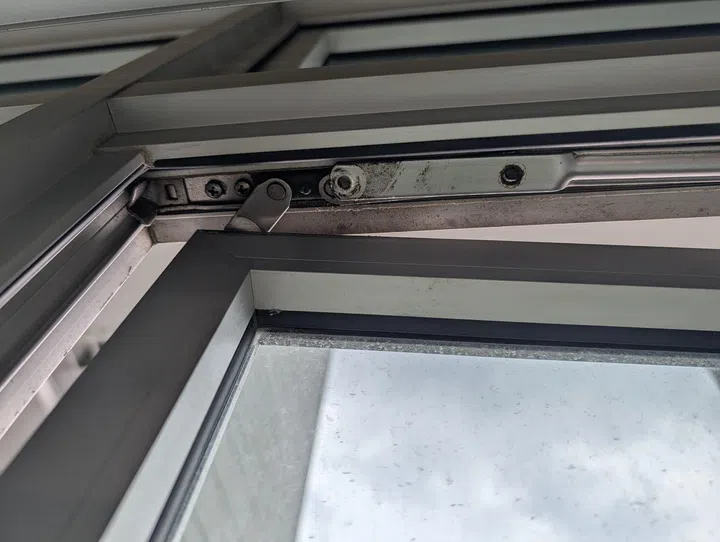
Hinges and internal mechanisms are where most failures occur; resistance, corrosion or misalignment can signal deeper issues that require attention.
One of the clearest early warning signs is resistance. “WD40 should be applied to the casement window hinges as soon as resistance is felt when closing or opening the windows,” they advise. They also caution that “owners should not forcefully close the casement window if it gets stuck, as it may damage the hinges beyond repair.”
Sliding windows come with a different set of issues. Tracks can collect debris over time, which interferes with the rollers and causes wear. Keeping tracks clear and checking rubber gaskets regularly helps prevent small faults from escalating.
In more serious cases, the issue becomes a safety concern. “Owners should act immediately if there is a broken glass or if the hinges have already given way, and may fall anytime.” In older flats, hinge failure is one of the most common reasons windows no longer meet HDB requirements. Regular checks, especially for ageing units, are essential to ensure continued compliance.
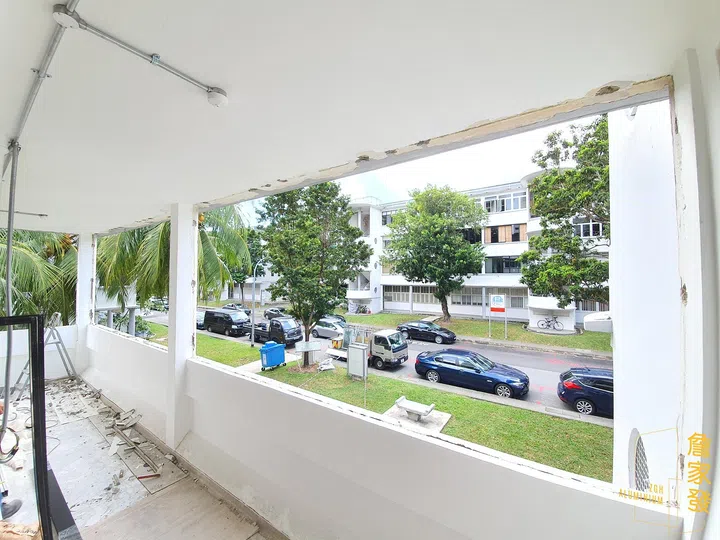
From dusty demolition to a clean installation, full window replacement is best timed with renovation—especially when wear extends beyond isolated repairs.
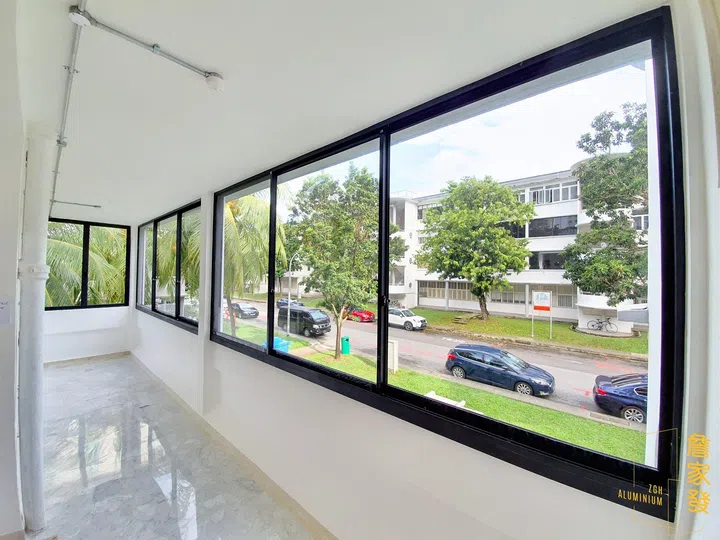
6. When to repair—and when window replacement makes sense
Once issues appear, the next question is whether to repair or replace. In many cases, repairs are the more practical short-term solution, especially for isolated problems such as worn hinges or faulty rollers.
However, this depends on the overall condition of the window. In older flats, where multiple components are already worn, replacement may be the smarter option. ZGH notes that “repairing may be a short-term solution as compared to replacing the window (long term-solution).”
That said, full replacement comes with trade-offs. It is more costly, disruptive, and often requires follow-up works. “Replacing windows will cause damage to the walls and it’s very dusty work… it is most recommended to do it during renovation.”
For this reason, repairs—when viable—are often the more practical choice outside of a renovation cycle. But as with most things, timing matters. Delaying too long can limit repair options and push homeowners towards replacement anyway.
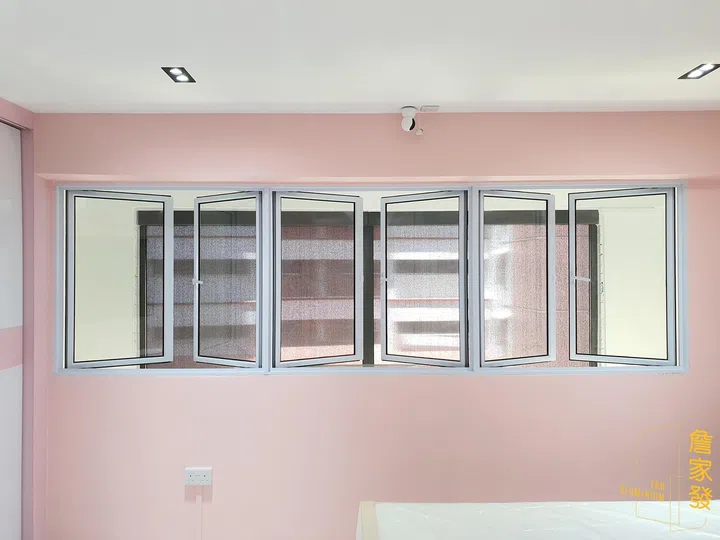
New window configurations can improve ventilation and usability, but are typically best installed as part of a planned replacement during renovation.
As a general guide, HDB windows typically last between 15 to 30 years, depending on its material, maintenance, and weather exposure. “Aluminium windows are durable and can last over 20 to 30 years with proper care,” ZGH adds, although this also varies by location. Units on higher floors face stronger wind and rain, while coastal homes may experience faster corrosion, requiring more frequent checks.
Ultimately, the decision comes down to timing and scope. Outside of renovation, repairs are often more practical—but if multiple issues are present, replacement may be worth considering earlier. “We recommend inspecting the windows at least twice a year,” they advise. “Check in with a HDB-approved window contractor if you are unsure of any issues.”
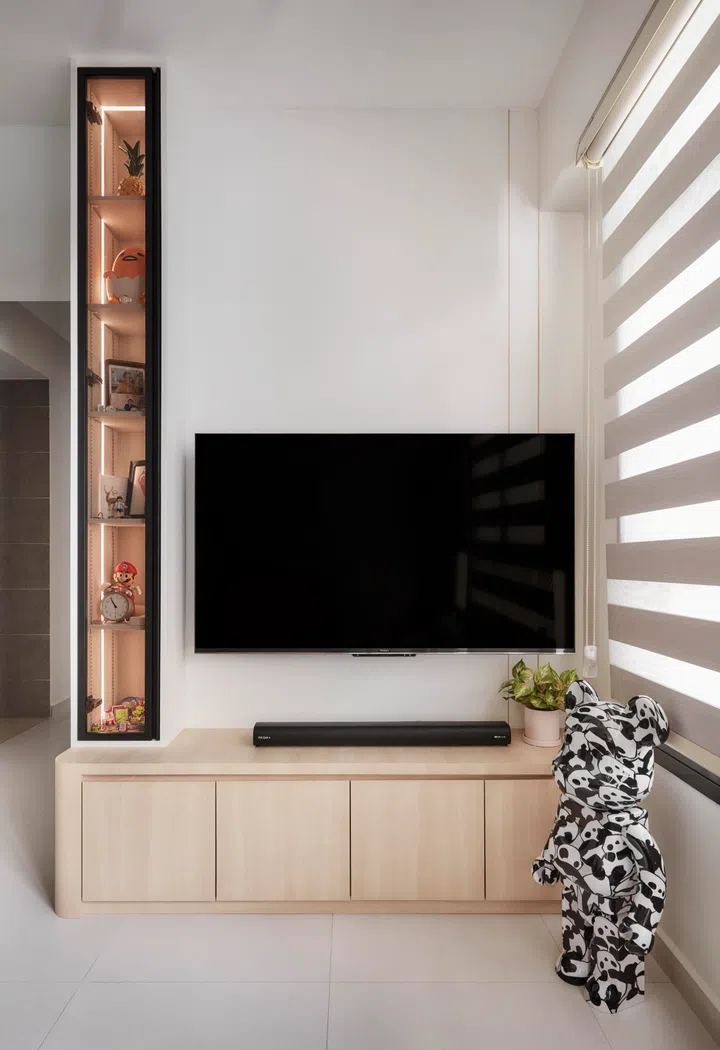
Curtain treatments and solar film work together to manage light, glare and privacy—keeping the space bright and usable without overheating.
Interior Design Takeaway: What to prioritise when planning your windows
By the time renovation begins, most homeowners already know what they want from their windows—more light, less heat, better privacy. The challenge is how to balance these from the outset.
One common mistake is prioritising appearance over performance. Darker glass does not necessarily mean less heat—what matters is how effectively a film reduces solar energy. In practice, this often means combining solutions, rather than relying on one, with curtains and blinds working alongside film to manage light, privacy, and heat.
Just as important is maintenance. Windows are mechanical systems, and small issues like resistance or misalignment are often early signs of wear. Addressing these early—and factoring window decisions into your renovation—helps prevent bigger problems and keeps the home comfortable over time.