
Share this article
For pottery aficionados, ceramic arts represent a tactile intersection of geography, geology, and human heritage. From the historic Ming-era kiln towns of East Asia to the studio pottery capitals of Europe and the Americas, traveling to throw, glaze, or hand-build clay at an esteemed studio offers an unparalleled connection to craft history.
These ten internationally celebrated pottery institutions and master workshops welcome visitors, enthusiasts, and seasoned potters looking to refine their technique alongside world-class masters.
The Leach Pottery in St Ives, Cornwall, United Kingdom
- Highlights: Throwing on historic studio setups, glaze mixing, studio pottery heritage.
- Duration: 2-day weekend courses to 5-day masterclasses.
- Price: ~£300 to £650 (~SGD 515 to SGD 1,115)
Founded in 1920 by Bernard Leach and Shoji Hamada, The Leach Pottery is widely considered the birthplace of Western studio pottery. It was here that the blending of British slipware traditions and Japanese aesthetic philosophy (mingei) reshaped modern ceramic art.
Located in coastal Cornwall, the studio remains an active production workshop, museum, and educational hub. Visitors can participate in intensive 2-day throwing weekends or week-long masterclasses conducted on traditional treadle and electric wheels, learning Leach’s timeless studio discipline, glazing techniques, and functional vessel design.
Kouraku Kiln (Arita Porcelain Workshop) in Saga Prefecture, Japan
- Highlights: Arita porcelain wheel-throwing, cobalt underglaze painting, kiln factory tours.
- Duration: Half-day experiences to 2-day artisan workshops.
- Price: ~JPY 4,500 to JPY 25,000 (~SGD 40 to SGD 220)
Arita is the spiritual capital of Japanese porcelain, having produced fine imari ware since kaolin clay deposits were discovered in the region in 1616.
Kouraku Kiln, established in 1865, offers international ceramic enthusiasts a rare look inside a centuries-old production facility.
Beyond their famous “porcelain treasure hunting” in the vast historic warehouses, Kouraku Kiln hosts dedicated hands-on porcelain throwing, slip-casting, and traditional underglaze painting workshops (sometsuke).
Guests work directly with fine translucent porcelain clay and cobalt blue pigments under the guidance of resident Japanese master artisans.
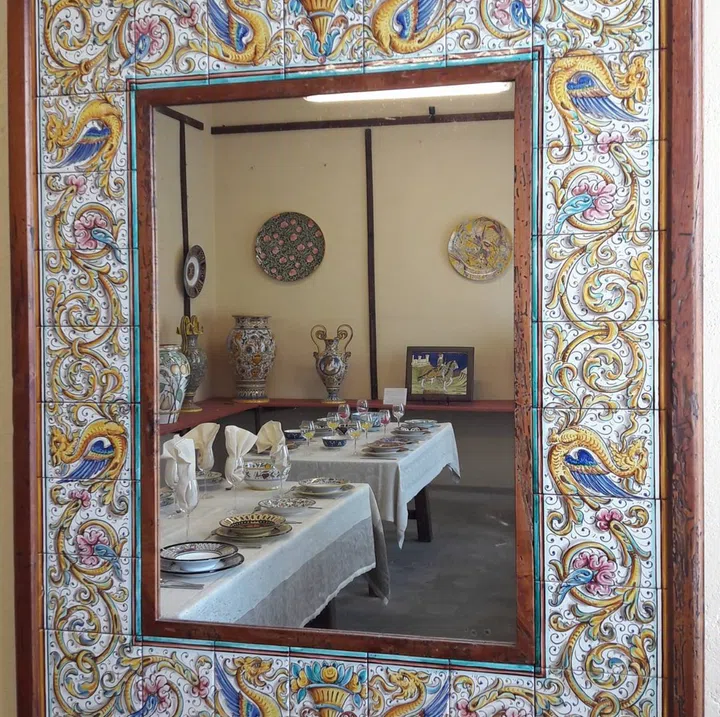
Maiolica Ceramiche Grazia in Deruta, Umbria, Italy
Maiolica Ceramiche Grazia in Deruta, Umbria, Italy
- Highlights: Terracotta wheel-throwing, tin-glaze application, historical Maiolica hand-painting.
- Duration: 1 to 3 days
- Price: ~€150 to €450 (~SGD 220 to SGD 650)
Deruta is a hilltop town in Umbria that has been synonymous with Italian Renaissance maiolica ceramics since the 13th century.
Ubaldo Grazia Ceramiche, founded in 1500, is one of the oldest operating pottery workshops in the world.
Their master workshops invite ceramicists to study authentic Umbrian technique: throwing terracotta clay on the wheel, applying opaque tin-glaze coats, and mastering delicate brushwork using classic Renaissance grotesques, floral scrollwork, and lustro (iridescent metallic) glazes.
Escola de Ceràmica de la Bisbal i Centre d’Artesania in La Bisbal d’Empordà, Catalonia, Spain
- Highlights: Traditional Mediterranean wheel-throwing, Catalan terracotta, Raku firing, glaze application.
- Duration: 2-day weekend modules to 5-day intensive courses.
- Price: ~€220 to €580 (~SGD 320 to SGD 840)
Situated in Catalonia’s historic pottery capital near Girona, the Escola de Ceràmica de La Bisbal is a prestigious institution dedicated to technical and artistic ceramic education.
Housed in a converted industrial kiln complex, the school offers short intensive modules for international enthusiasts.
Courses range from traditional Mediterranean wheel-throwing and terracotta glazes to specialized historic techniques like raku firing, pit firing, and glaze chemistry.
Uriarte Talavera Studio in Puebla, Mexico
- Highlights: UNESCO-recognised Talavera methods, mineral pigment glazing, hand-building and throwing.
- Duration: 1 to 2 days
- Price: ~MXN 2,500 to MXN 6,000 (~SGD 170 to SGD 410)
Founded in 1824, Uriarte Talavera is Mexico’s oldest continuously operating Talavera workshop, preserving a ceramic style protected by UNESCO Intangible Cultural Heritage status.
Talavera poblana combines Spanish, Italian, and indigenous Mexican tin-glaze traditions.
Through private behind-the-scenes masterclasses, participants learn the strict historical protocols: stomping local black and white clays, wheel-forming vessels, applying mineral glaze, and hand-painting intricate patterns using the six traditional natural pigments (cobalt blue, yellow, black, green, orange, and mauve).
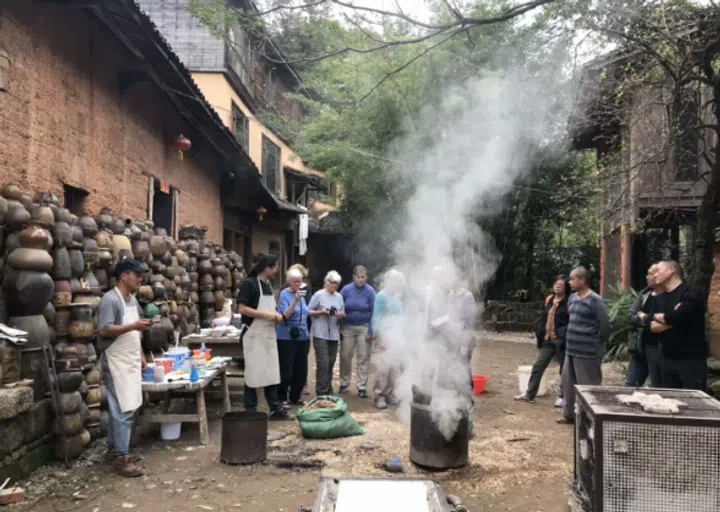
Pottery residency at Jingdezhen International Studio & Sanbao Ceramic Art Institute in Jiangxi, China (景德镇三宝国际陶艺村, 江西省).
Jingdezhen International Studio & Sanbao Ceramic Art Institute in Jiangxi, China (景德镇三宝国际陶艺村, 江西省)
- Highlights: Imperial-grade porcelain throwing, Chinese brush glazing, wood-fired kiln culture.
- Duration: Contact or email the institute beforehand to organise a date.
- Price: Reportedly ~RMB 1,200 to RMB 3,500 (~SGD 230 to SGD 670)
景德镇 (Jing de zhen, meaning “Jing De Town”) is universally acclaimed as the “Porcelain Capital of the World,” having supplied imperial Chinese courts with fine porcelain for over 1,000 years.
The Sanbao Ceramic Art Institute, founded by artist Jackson Li in a tranquil valley outside Jingdezhen, serves as a global cross-cultural pottery sanctuary.
Their short-course workshops give visitors direct access to Jingdezhen’s incomparable ceramic ecosystem, including master-led modules on high-translucency porcelain throwing, carving, brush-painting with local cobalt, and traditional wood-fired kiln operation.
Vallauris Ceramic School & Atelier Courses in Côte d’Azur, France
- Highlights: Mid-century modernist ceramic decoration, wheel-throwing, clay modeling, French Riviera earthenware.
- Duration: Half-day discovery sessions to multi-day intensive courses.
- Price: ~€50 to €350 (varies based on introductory vs multi-day courses)
- That’s ~SGD 70 to SGD 510
Vallauris, a historic pottery town on the French Riviera, became an epicenter of mid-century ceramic innovation when Pablo Picasso settled there in 1948 to create art at the Madoura Studio.
Today, through official municipal ceramic schools and local artisan ateliers coordinated by the Vallauris Golfe-Juan Tourism Board, international visitors can participate in authentic French Riviera pottery workshops.
Hands-on courses cover traditional wheel-throwing, clay modeling, ceramic engraving, and earthenware decoration inspired by Picasso’s iconic modernist techniques and the region’s rich ceramic history.
Ye’s Park in Icheon Ceramic Village, Gyeonggi Province, South Korea (이천도자예술마을 (이천 예스파크))
- Highlights: Traditional Korean floor-wheel throwing, celadon inlay carving (sanggam), reduction glazes.
- Duration: Half-day to 2-day immersive workshops.
- Price: ~KRW 90,000 to KRW 350,000 (~SGD 90 to SGD 350)
Icheon is a UNESCO City of Crafts and Folk Art, famed for its thousand-year history of Korean celadon (cheongja) and white porcelain (baekja). At studio workshops within the Icheon Ceramic Village, master potters teach traditional Korean pottery rituals.
Guests experience throwing native clay on low floor wheels, carving intricate sanggam (inlay) motifs into wet greenware, and applying jade-green celadon glazes that mimic historical Goryeo Dynasty masterworks.
Download the Naver map mobile app, copy and paste Ye’s Park’s Korean name listed above to find and contact them.
La Meridian Ceramic Art Centre in Tuscany, Italy
- Highlights: Tuscan terracotta, terra sigillata finishes, high-level wheel mechanics.
- Duration: 2 to 5 days
- Price: ~€380 to €890 (~SGD 550 to SGD 1,290)
Nestled in the rolling hills of Tuscany, La Meridiana is an internationally renowned non-profit international school of ceramics. Housed in a beautifully restored 18th-century farmhouse, it attracts legendary guest instructors from across the globe.
While they run famous intensive summer schools, their short 2- to 3-day workshops cover wheel-throwing precision, terracotta firing, decorative slipware, and terra sigillata surface treatments, all paired with authentic Tuscan hospitality.
The Clay Studio in Philadelphia, Pennsylvania, USA
- Highlights: High-fire cone 10 reduction, wheel-throwing bootcamps, soda/salt firing.
- Duration: 1 to 2 days (Weekend intensives)
- Price: ~$150 to $380 USD (~SGD 195 to SGD 495)
Founded in 1974, The Clay Studio is one of North America’s premier ceramic art institutions, recently moving into a state-of-the-art multi-storey facility in Philadelphia.
Renowned for bridging traditional wheel culture with contemporary ceramic sculpture, they offer 1- to 2-day intensive weekend “bootcamps” and guest artist masterclasses.
Visitors can learn everything from wheel-throwing fundamentals and surface alteration to soda-firing and cone-10 glaze techniques.