
Share this article
Sitting at the now-defunct Angie’s Oyster Bar & Grill on a rainy evening, my husband and I watched the lights in Tan Boon Liat Building go off one by one as couples dashed to their cars. We had just wrapped up our wedding lunch nearby, and the moment felt strangely full circle.
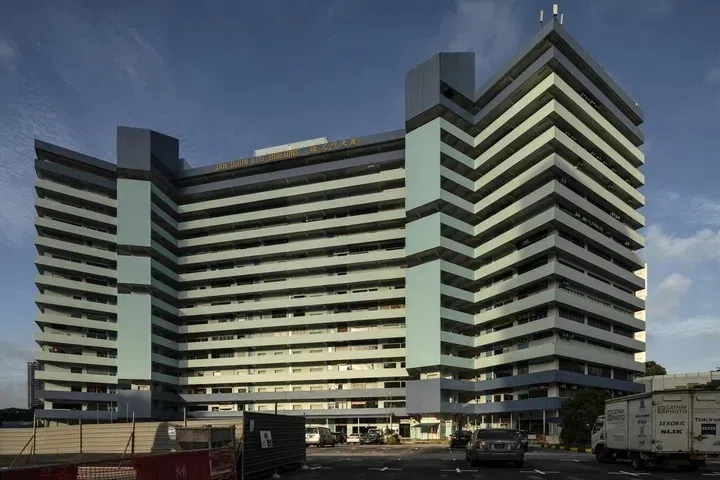
Two years earlier, when our home was still a construction site, we were one of those couples: armed with a Notes app full of shortlisted stores and losing count of the floors we’d covered within the 15-storey Tan Boon Liat building. I remember thinking it’s like a theme park for grown-ups with adult money, and it almost makes the long wait for key collection something to savour.
So, when news of its S$950 million en bloc sale surfaced earlier this month, I couldn’t help but feel wistful. It felt like the end of an era for many, myself included.
Not just a shopping centre
Why did the news strike such a melancholic chord with many? The answer seems straightforward if we treated the building as just a shopping centre: it’s one of the few remaining one-stop destinations where customers can browse dozens of furniture stores in one sitting. (Those who grew up in Singapore may remember similar furniture meccas like IMM and Park Mall, but those are stories for another day.)
“It’s a 15-storey building with very large units. Some are 3,000 to 4,000 square feet, so customers can explore a huge range of furniture and styles under one roof,” explained Mr Esmaeil Molazadeh, owner of Gabbeh Carpet and honorary secretary of the Singapore Furniture Association.
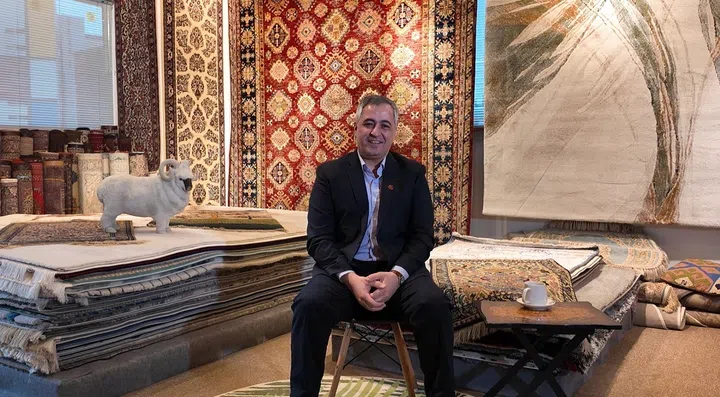
Mr Esmaeil Molazadeh in his store at Tan Boon Liat Building.
Without hubs like these, furnishing a home would mean travelling from one end of the island to another—and we all know multiple visits are sometimes required before one makes a decision. Yet, convenience alone hardly explains why so many Singaporeans are mourning its imminent disappearance.
If anything, the public response reminded me of the outpouring that followed the recent loss of The Projector, if only because Tan Boon Liat Building is an arts, culture and heritage icon in its own right.
From the building’s Brutalist facade to tenants whose furniture tells stories of the nation’s past, the building invites people to experience Singapore’s history through an unlikely: furniture.
A vestige of Singapore’s history
The way co-founder of Singapore Trading Post Jo Harrison sees it, Singapore has developed a design identity that’s uniquely its own, blending influences from its history with a very contemporary outlook.
“It’s been exciting to watch younger homeowners embrace that, creating homes that feel sophisticated, personal and distinctly Singaporean rather than simply following international trends.”
At their store in Tan Boon Liat Building, many customers find themselves drawn to furniture and decor that recalls Singapore’s colonial past, bringing to mind the black-and-white bungalows and a bygone way of life.
“Our iconic ice buckets are always a talking point. They often remind people of Singapore’s classic entertaining style, while still feeling relevant in a modern home.”

Likewise, Ipse Ipsa Ipsum’s Singapore Airlines collection—which includes an upcycled drink cart—has sparked many conversations among customers, especially former cabin crew.
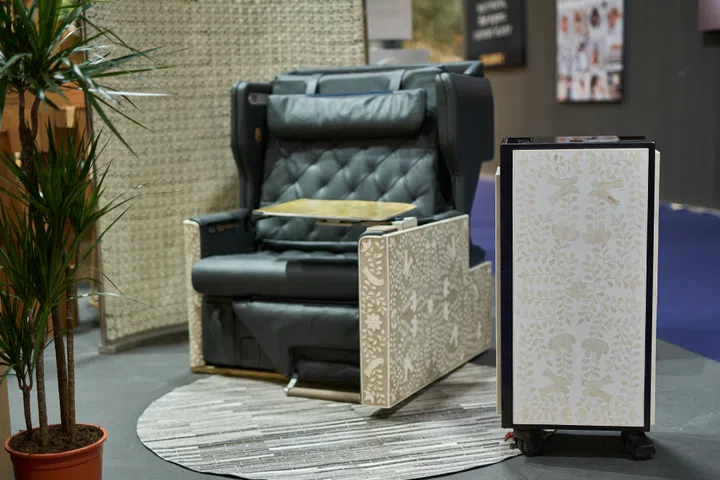
Ipse Ipsa Ipsum’s Towkay Chair and Stylo Milo Bar Cart
Others have found traces of their own childhoods in the store’s Peranakan collection, recalling festive gatherings at their grandparents’ homes and the memories attached to the furniture.
“Furniture can become a very personal way of engaging with Singapore’s heritage. Unlike a museum exhibit, it’s something people use, experience, and pass on,” said store owner Mr Saurabh Mangla (Sam).
“If our work encourages people to look at Singapore’s history with fresh eyes while enjoying contemporary design, we’ve fulfilled our purpose.”
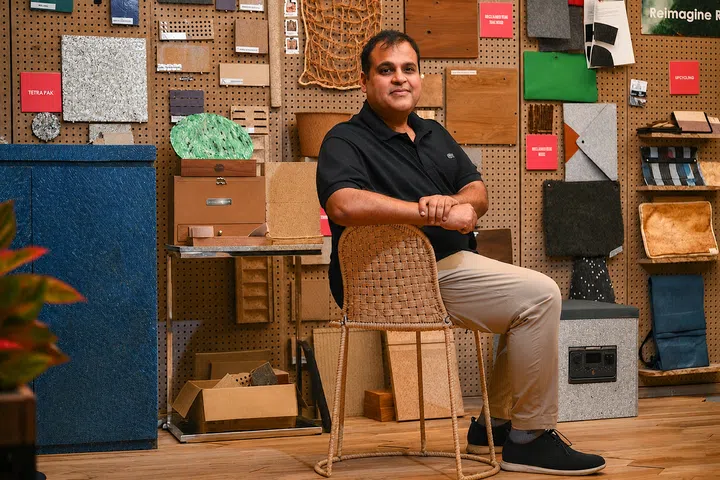
Mr Saurabh Mangla (Sam), store owner of Ipse Ipsa Ipsum.
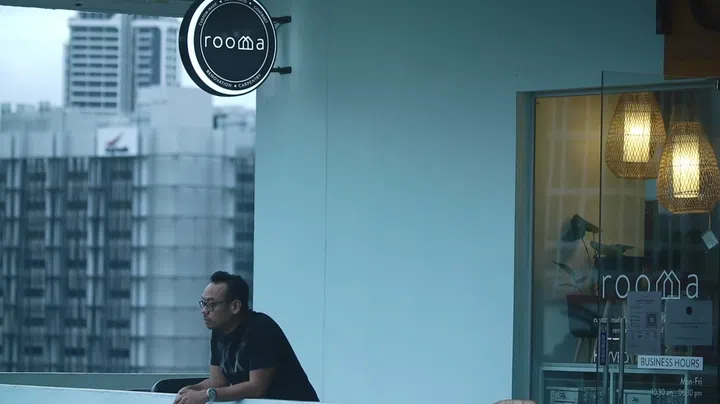
At times, this storytelling also helps bridge generations. Take Rooma, which curated a “retro” showroom at the start of the year to showcase nostalgic decor and upcycled furniture, including pieces from old classrooms.
“I have parents who come and tell their kids, ‘ this is the phone we used in the past, and this is the TV your grandfather used to own,” said Mr Hazlee Suip, founder of Rooma.
Although he figures these pieces may not sell as well as his other furniture, he takes pride in being able to showcase vintage items.
“I think TBL is the last place you can go to for unique stuff, and if the building is gone, everything would just be online shopping and Singapore will lose this kind of furniture identity.”
More than neighbours
Mr Molazadeh tells us that the tenants are exploring the possibility of relocating collectively. However, it is unlikely they will be able to find a space large enough to accommodate so many businesses.
“It will be very difficult, almost impossible, to replace this building, in terms of its size, its location, and what it offers,” added Mr Molazadeh.
What Tan Boon Liat offers, in this case, goes beyond space and accessibility. It’s also a community that is better described as a creative ecosystem than a commercial one.
Ordinarily, housing so many furniture businesses under one roof would breed fierce competition. Yet Mr Molazadeh says the opposite has happened.
“Some of us have been here for over 20 years, and our businesses have grown to complement each other,” he said.
For example, when a neighbouring retailer needed a carpet to match an odd-shaped sofa that had just arrived, he had no hesitation bringing one in specially to help.
In fact, store owners regularly share resources, from refrigerator space to water dispensers and even manpower. On occasions when a neighbouring store assistant falls sick and a showroom is short-handed, others are happy to step in.
“We trusted each other so much that sometimes we were even holding the keys to each other’s units to open the shop on their behalf,” he said.
Over the years, many tenants have even become family friends, gathering in one another’s homes for their children’s birthdays and festive celebrations. For Mr Molazadeh, these relationships make the impending loss especially painful.
“But there’s no choice. This is the nature of business and life in general. Just as children have to leave their parents’ nest, there comes a time when we have to move too.”