
$50,000 Renovation for a couple’s loft apartment in Tanjong Pagar
A light refresh, thoughtful edits and carefully chosen furnishings bring quiet freshness to a loft apartment its owner has cherished for years.
By Gwyneth Goh -
Share this article
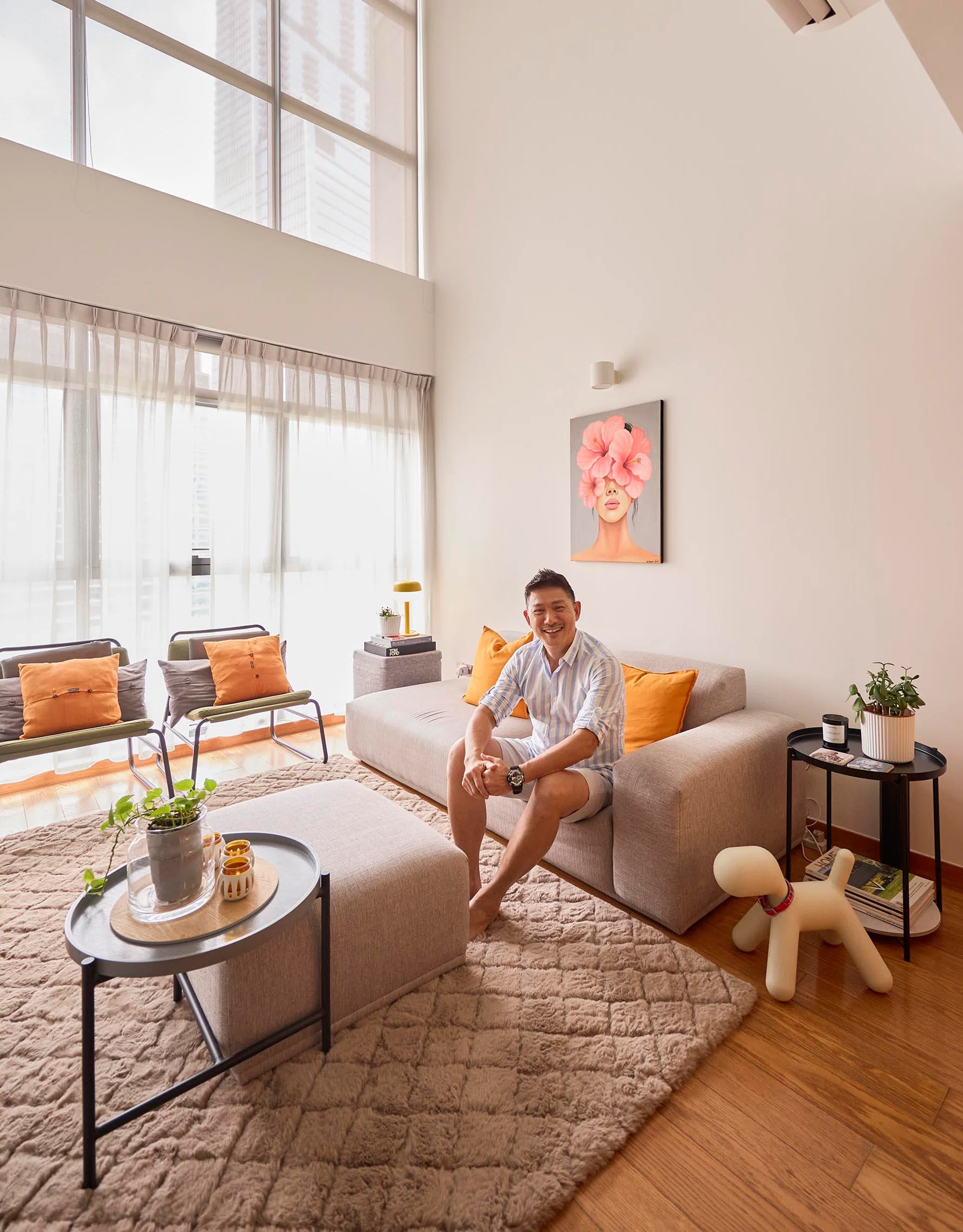
A narrow entry corridor lined with warm timber gradually opens into a soaring double-volume living room, where tall windows draw daylight deep into the apartment. Soft sheers filter the light while a scattering of orange accents animates the otherwise calm palette below.
Terence first bought the apartment in 2004, drawn to its central location and the promise of city living. “I decided to purchase the loft unit very quickly as I felt right about it,” he recalls. Today, he shares the home with his partner Chris.
Both professionals in their 50s, the couple returned to the neighbourhood after years abroad, certain about where they wanted to live again. “When we moved back from Melbourne, we decided that we need to live in Tanjong Pagar. We had no other options to even consider.”
Who Lives Here: Terence and Chris, both in their 50s, professionals in the construction and media industries respectively
Home: Loft apartment at Icon Residence, Tanjong Pagar
Size: 786 sq ft
Interior Designer: Self-designed
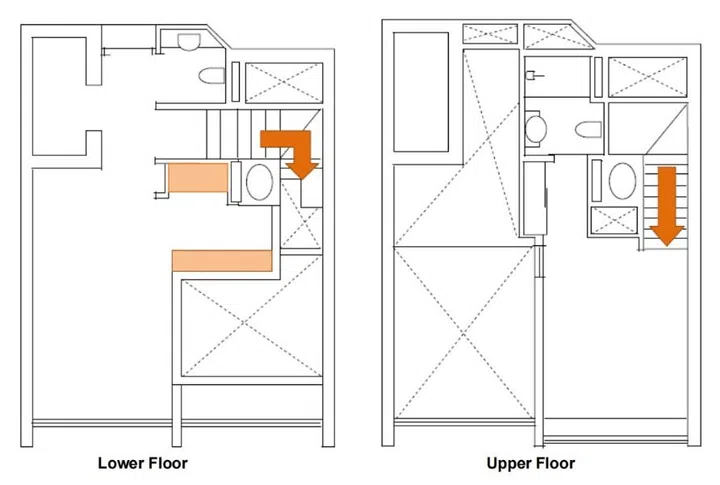
The compact loft is organised across two levels, with the living room occupying the double-volume space below and the bedroom tucked above on the mezzanine level.
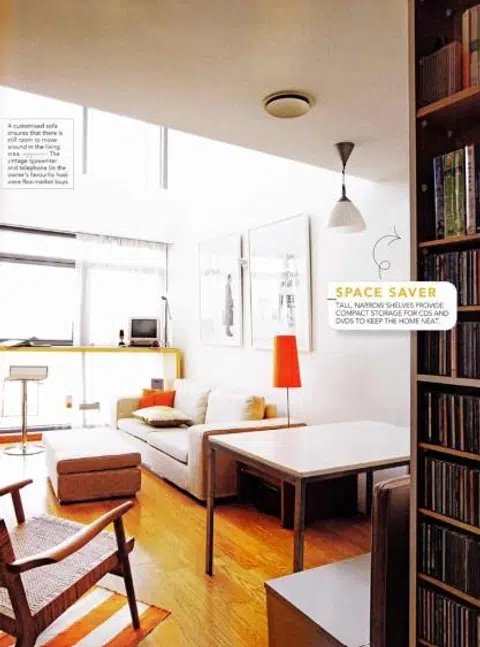
The apartment as featured in Home & Decor in 2010. Even then, Terence’s preference for a restrained palette punctuated by orange accents was already defining the living room.
A home that has grown with time
Long-time readers of Home & Decor may find this apartment familiar. The loft was previously featured in the magazine in 2010, when Terence first styled his home with the same easy restraint that still defines it today.
The earlier photographs show a living room remarkably similar in spirit, with warm timber floors, clean lines and flashes of orange threading through the space. More than a decade on, the layout remains largely unchanged, a quiet testament to how well the apartment was conceived from the start.
Instead of undertaking a dramatic reinvention, Terence and Chris chose to refresh what was already working. The recent updates focused on repainting the apartment, replacing bathroom fittings, installing new blinds and updating the air-conditioning units, alongside introducing a few carefully chosen furnishings.
The resulting space feels familiar yet renewed—the same airy framework, now softened by years of living and thoughtful edits.
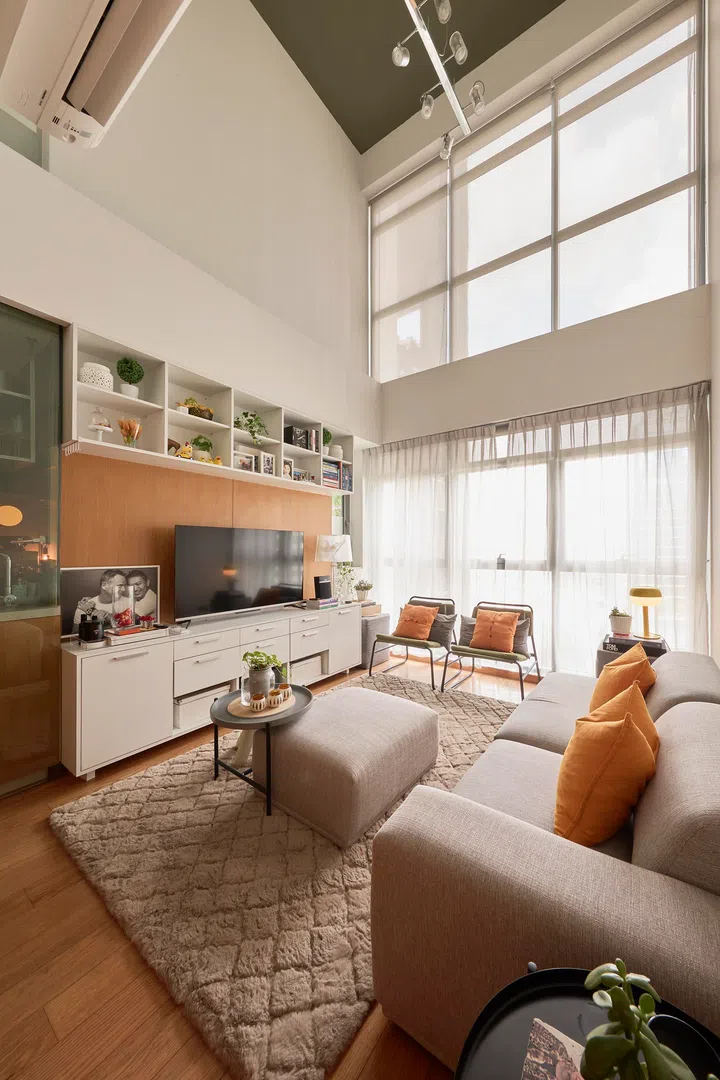
The double-volume living room is kept deliberately pared back, allowing natural light and height to define the space.
Living room: Living with height and restraint
The living area unfolds with a sense of ease, centred around a low seating arrangement that keeps the focus on proportion rather than decoration. Against the tall walls, furnishings sit quietly within the space, while sheer curtains gently diffuse the daylight into a soft, even glow.
For Terence, this clarity is intentional. “Less is more,” he says. “Living in a smaller apartment makes me think what to keep over time.” Rather than filling the space, the couple have chosen to edit it carefully, creating a pared-back composition where each piece has a place without overwhelming the space.
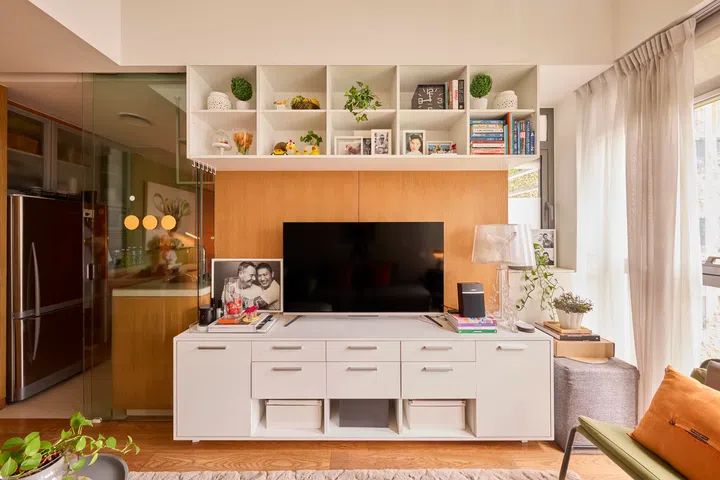
Open shelving above the television displays books and mementos, balancing storage with a light, uncluttered presence.
TV Console
A wall of shelving above the television introduces a quieter layer of display, with books and personal objects arranged in measured doses. Practicality sits just beneath the surface of this restraint.
“Storage, storage… practical and functional,” Terence cites as the crucial non-negotiable for this refresh, “Custom-made and off the shelf cabinets and cupboards were very necessary.”
The living area is also where much of their daily life unfolds. Evenings are often spent unwinding with a television series, or heading out for a foot massage in the neighbourhood. When friends come by, the same space shifts easily into an informal setting for hosting.
“We do spend quite a bit of time in our living area,” Terence says, “which is also our entertainment space when friends are over for a glass of wine or Chris’ homemade cocktails.”
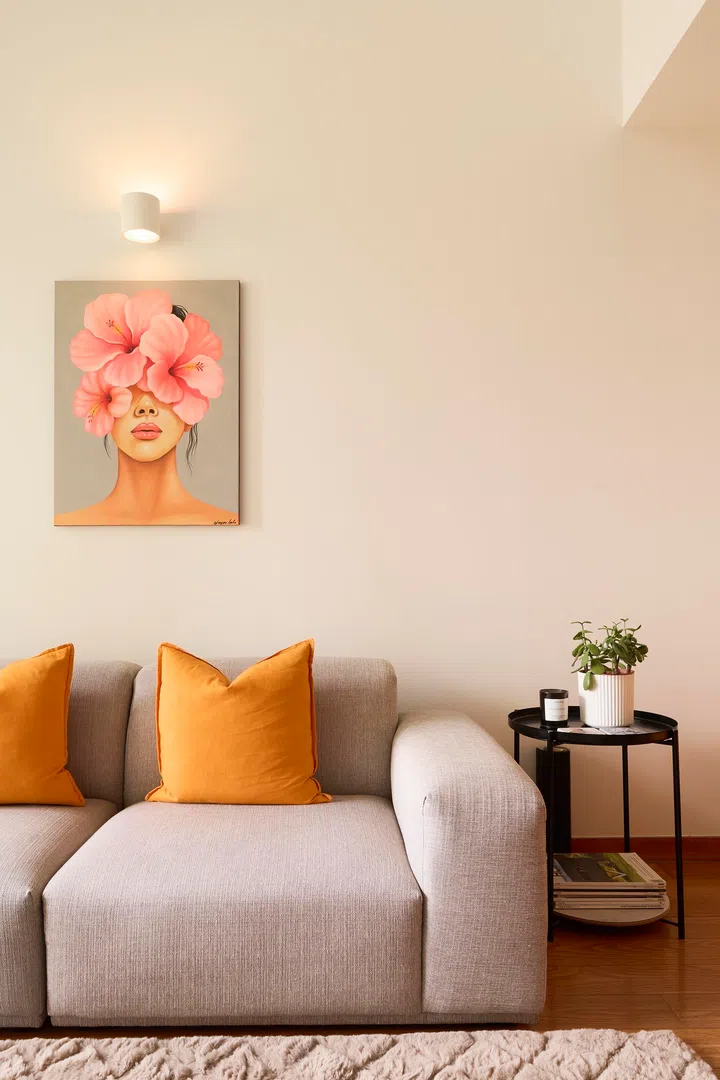
Orange accents, Terence’s signature colour, appear in cushions and artwork, adding warmth to the neutral palette.
Orange Accents
Colour, meanwhile, is used with a light hand. Orange appears in measured accents—across cushions, objects and lighting—to create a subtle rhythm against an otherwise neutral palette.
“Orange represents happiness, energy, optimism, warmth, confidence and love—which also commands attention,” Terence says of his signature hue.
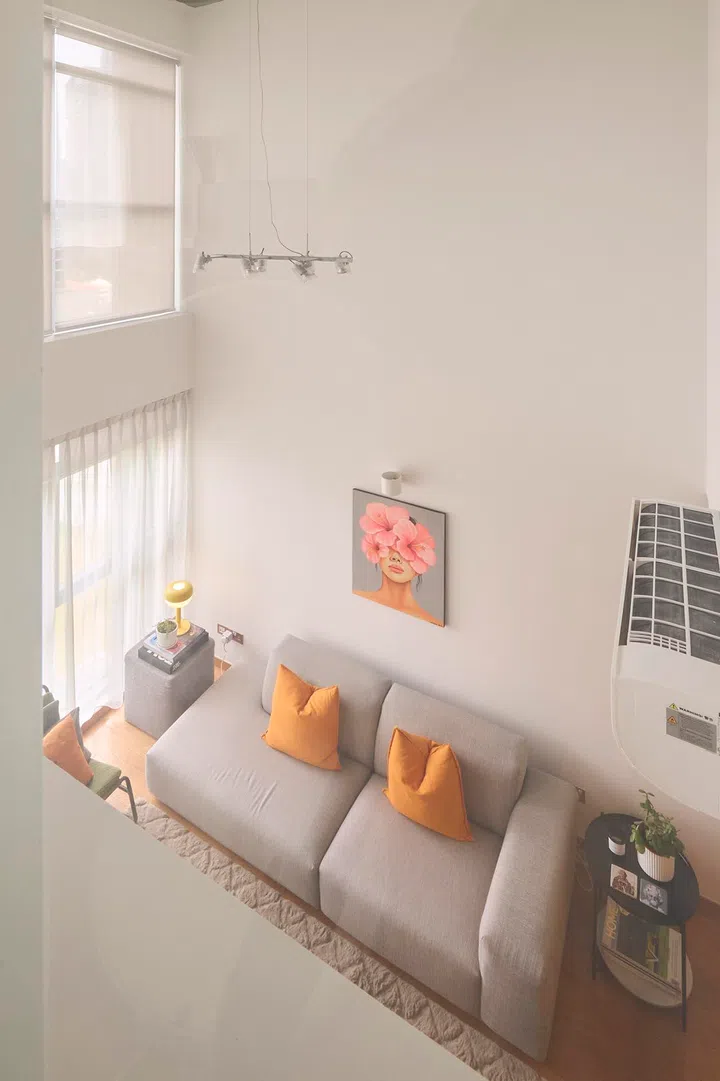
Viewed from the loft, the living area reveals a compact footprint beneath the double-height ceiling.
Seen from above, the composition becomes even clearer: a compact footprint organised with intention, where every element has been considered, but nothing feels overworked.
Terence quips, “As it is a small apartment, generally every part of our home is our favourite.”
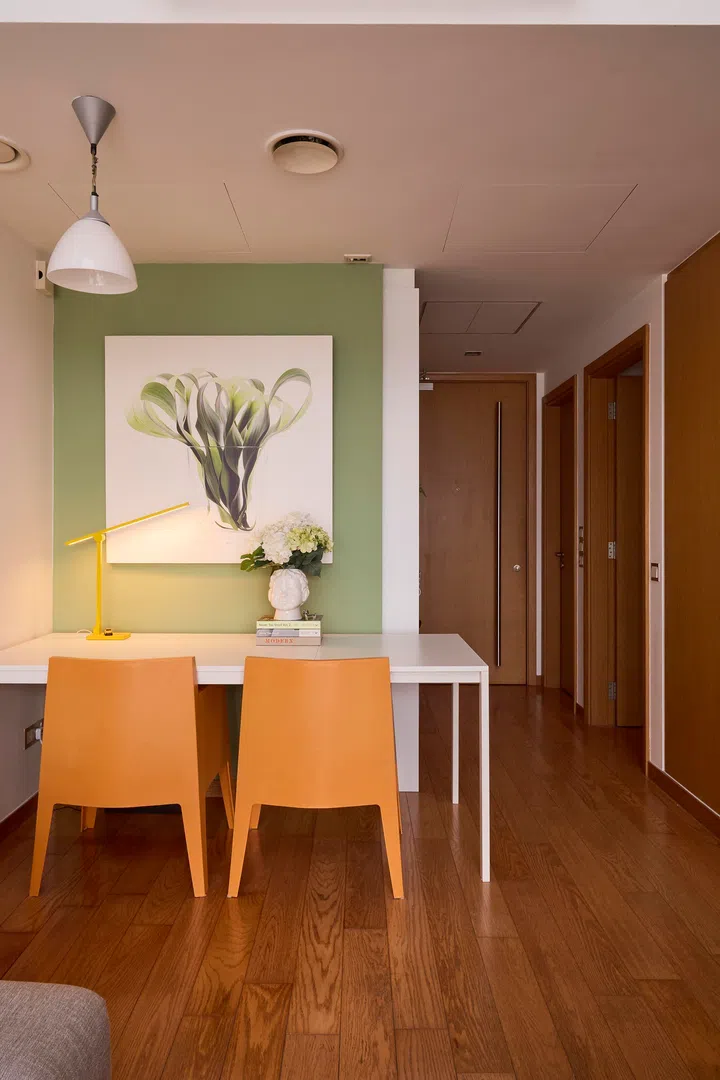
The dining area carries through the home’s palette, where a simple white table and orange chairs sit against a soft green wall.
Dining area
A quiet extension of the living area, the adjacent dining space carries the same calm, uncluttered rhythm. A simple white table supports everyday meals, work and conversation, paired with orange “Toy” chairs by Philippe Starck—two of a few must-have pieces that have travelled with the couple from home to home. A sage green wall introduces a gentle shift in tone.
Rather than separating the two zones, the dining area reads as a natural extension of the living space, maintaining openness within the compact footprint. The palette remains light and deliberate, with colour used sparingly to animate the otherwise neutral base.
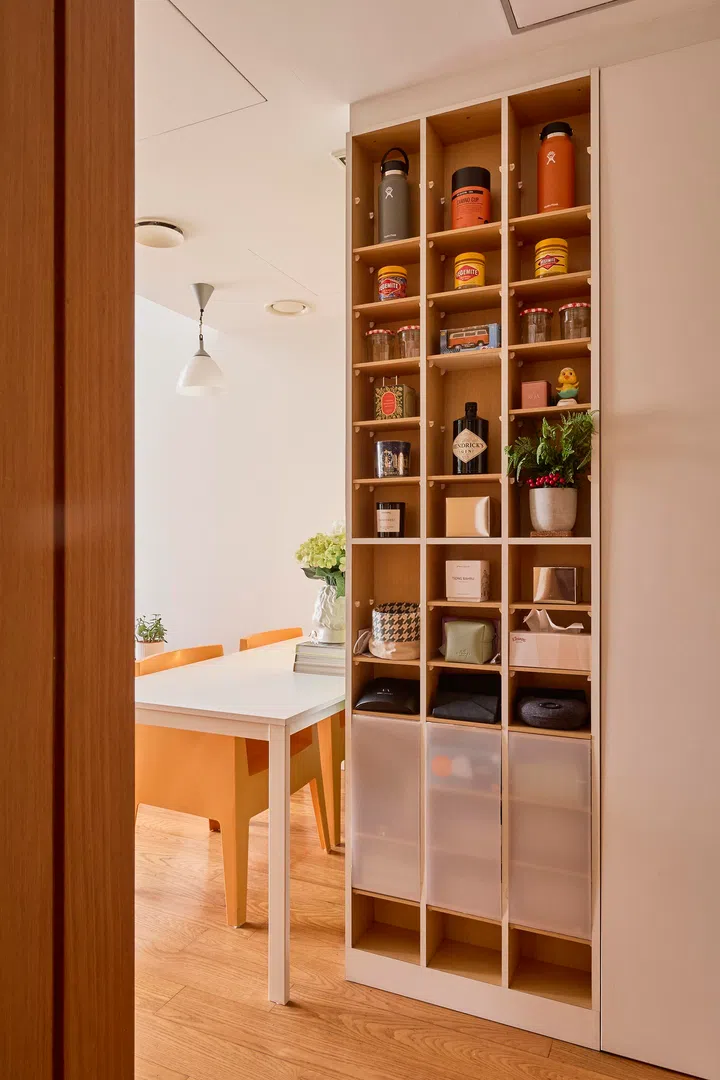
A tall, narrow shelving unit keeps everyday items neatly organised, supporting the home’s clean and uncluttered look.
Storage
Storage is again quietly integrated. A tall, narrow shelving unit nearby holds everyday items and pantry staples, keeping the space organised without adding visual weight. It’s a continuation of the approach seen throughout the home—practical, considered, and edited over time.
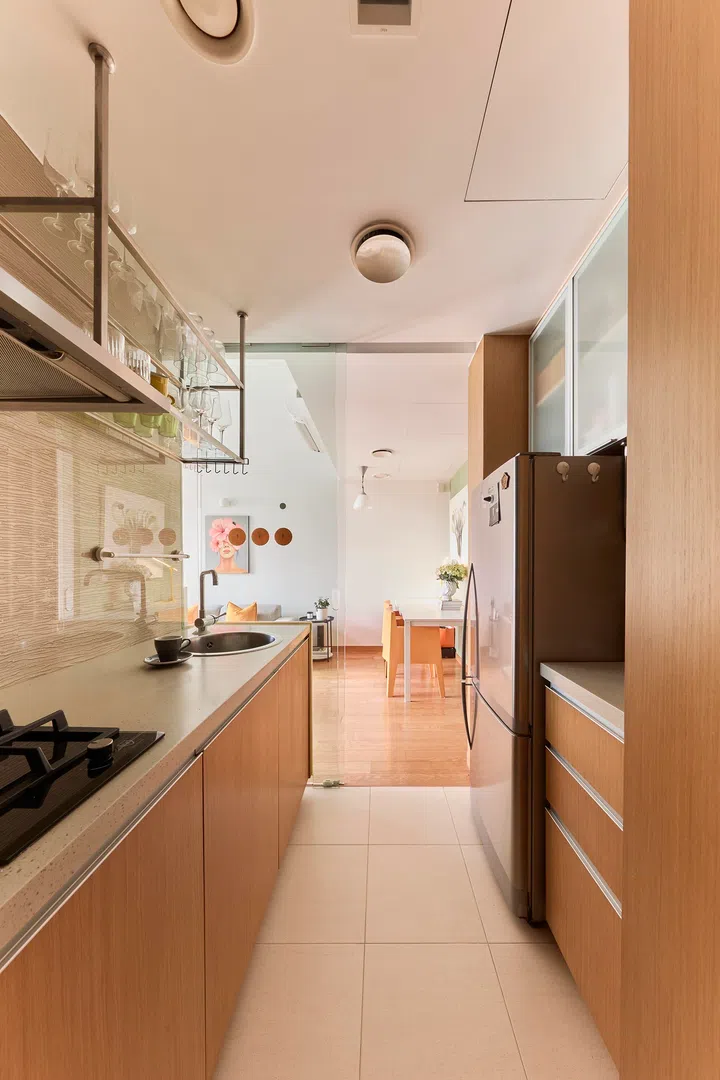
A compact galley kitchen keeps everything within easy reach, with timber cabinetry adding warmth to the functional layout.
Kitchen: Compact and considered
Tucked just beside the dining area, the kitchen is organised as a compact galley, where everything is kept within easy reach. Timber cabinetry lines both sides, lending warmth to the otherwise simple space, while open shelving above the counter keeps frequently used items visible and accessible.
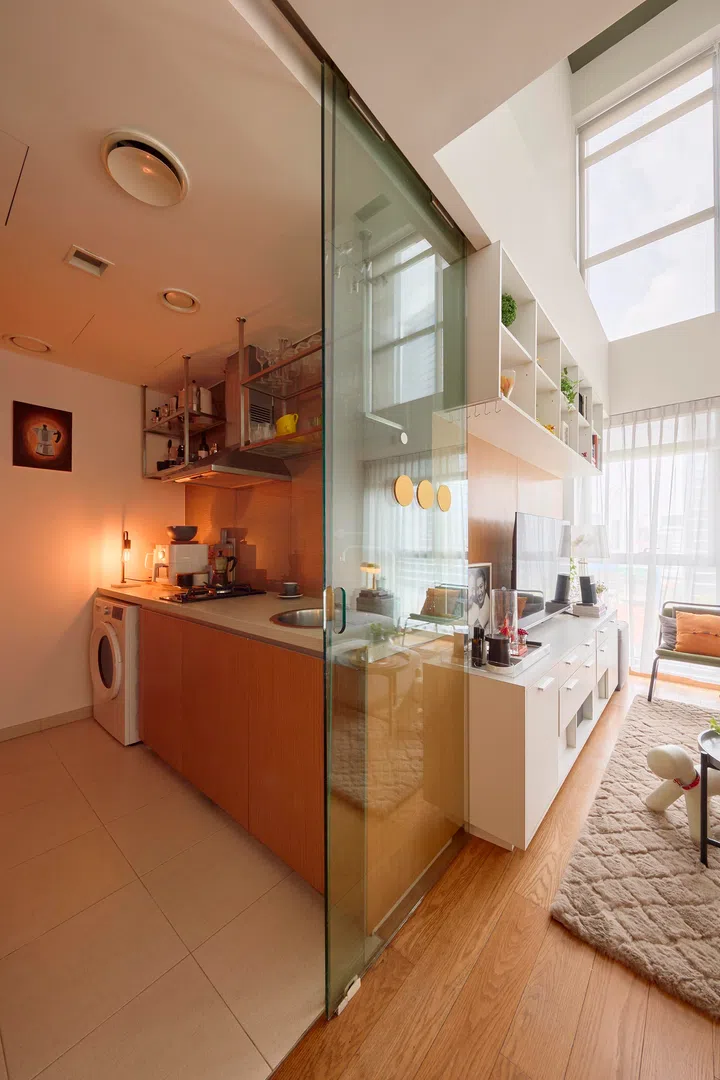
A sliding glass partition separates the kitchen from the living area, maintaining openness while containing the workspace.
A sliding glass partition separates the kitchen from the living area, allowing light to pass through while containing the more practical aspects of daily use. When opened, the spaces read as one continuous volume; when closed, the kitchen becomes a contained, functional zone—supporting everyday routines without overworking the space.
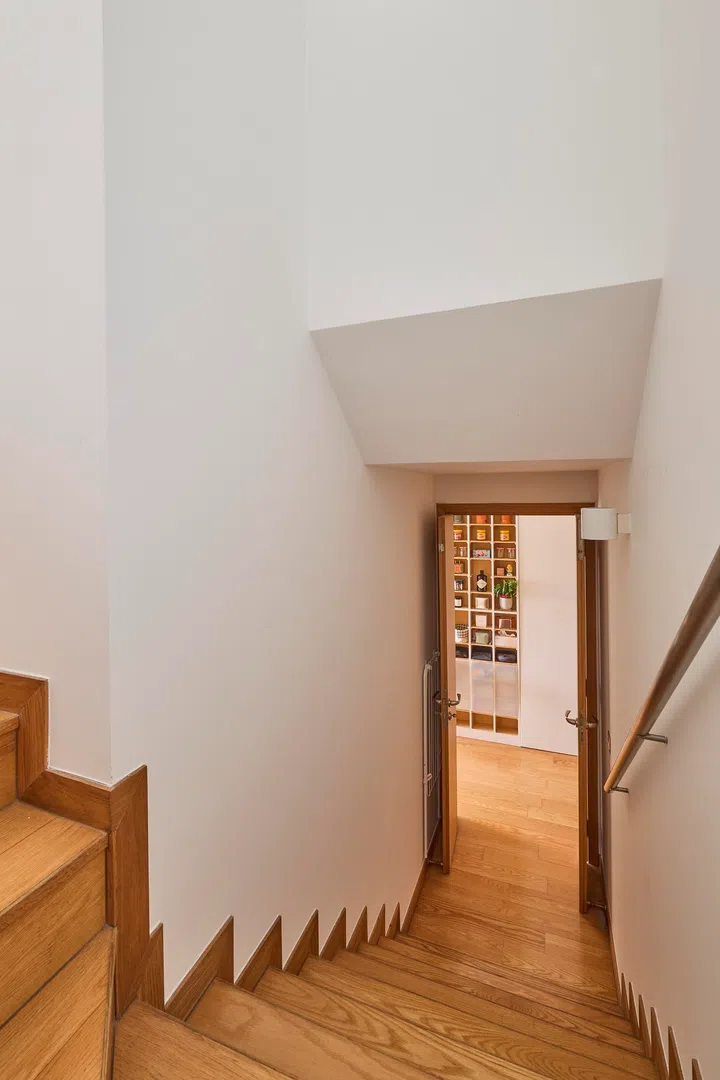
A timber staircase connects the lower and upper levels, offering a simple transition between social and private spaces.
Staircase: A quiet transition
A compact staircase connects the two levels, marking a gentle shift from the openness below to the more private spaces above. Finished in warm timber, it echoes the material palette of the living areas while keeping the transition simple and unobtrusive.
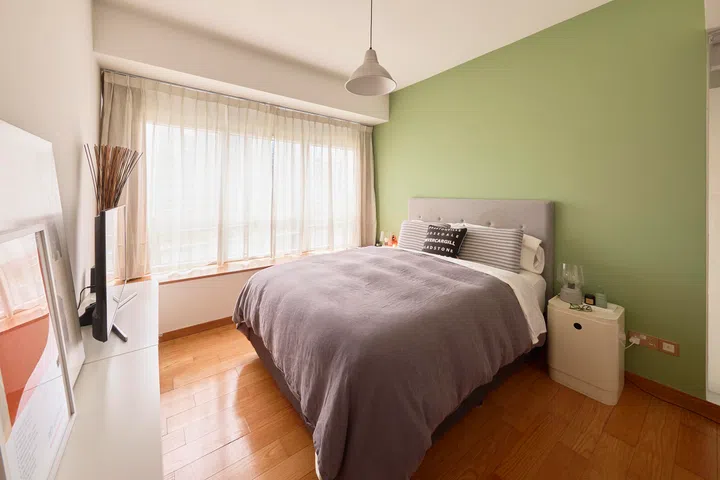
The bedroom is kept simple and calm, with a soft green wall and filtered daylight shaping a quiet, restful atmosphere.
Loft Bedroom: Pared back and personal
Upstairs, the bedroom shifts into a quieter, more introspective mood. Set against a second sage green wall, the space is kept deliberately minimal, allowing light, material and proportion to take precedence over decoration.
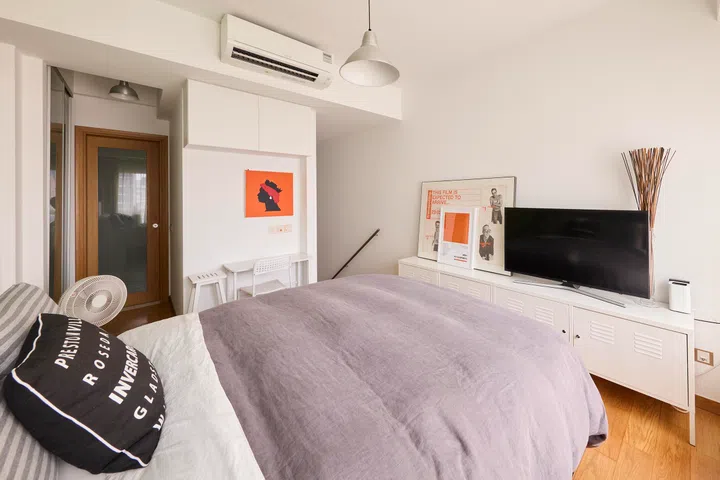
Minimal furnishings keep the focus on proportion and light, while built-in storage is kept unobtrusive.
“The atmosphere in our bedroom is quite Zen… very minimalistic,” Terence says. The palette is gentle and calming, with sheer curtains filtering daylight across the room, while warm timber flooring carries through from below.
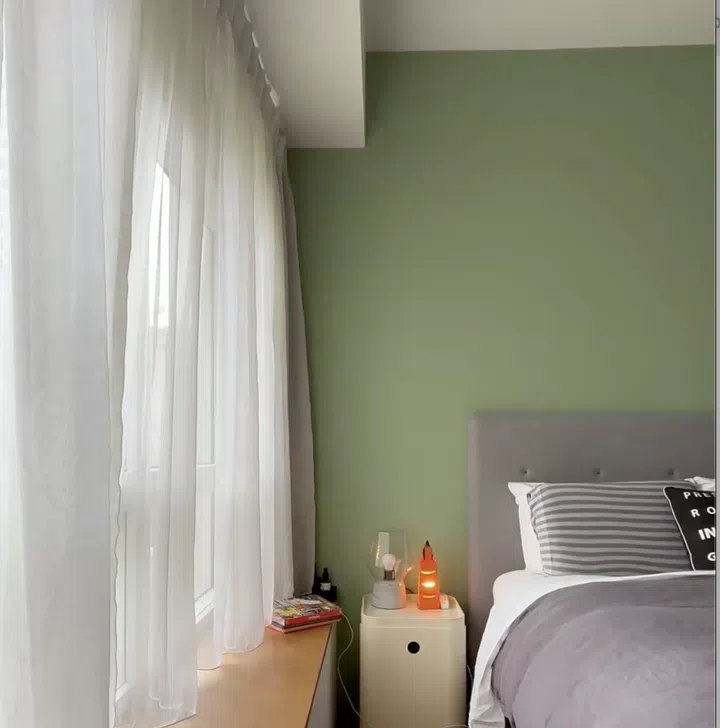
Soft, warm lighting sets the tone at night, reinforcing the bedroom’s calm and restful atmosphere.
Lighting plays an important role in shaping this atmosphere. “The table lamps do enhance the mood at night,” he adds, noting that “one thing which is a no-no for us is no white light in our home.” Instead, the room is lit in softer tones that reinforce its sense of calm.
Personal objects are introduced sparingly but meaningfully. Among them is the orange grater lamp at their bedside—a small but distinctive piece that reflect Terence’s affinity for colour and collectable design.
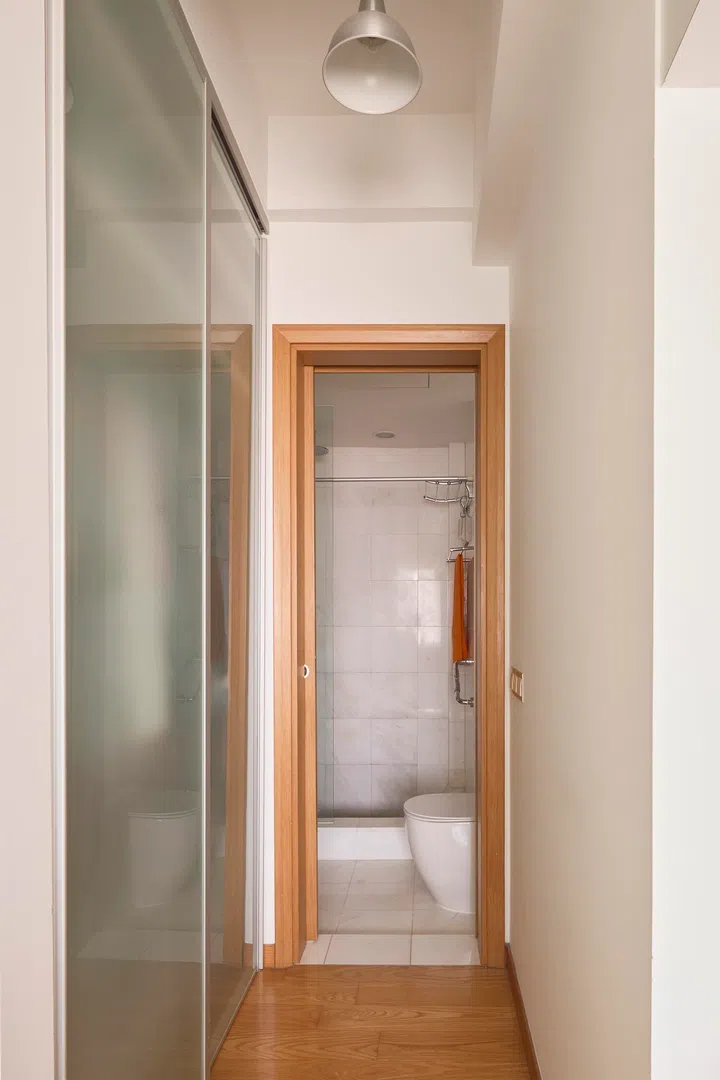
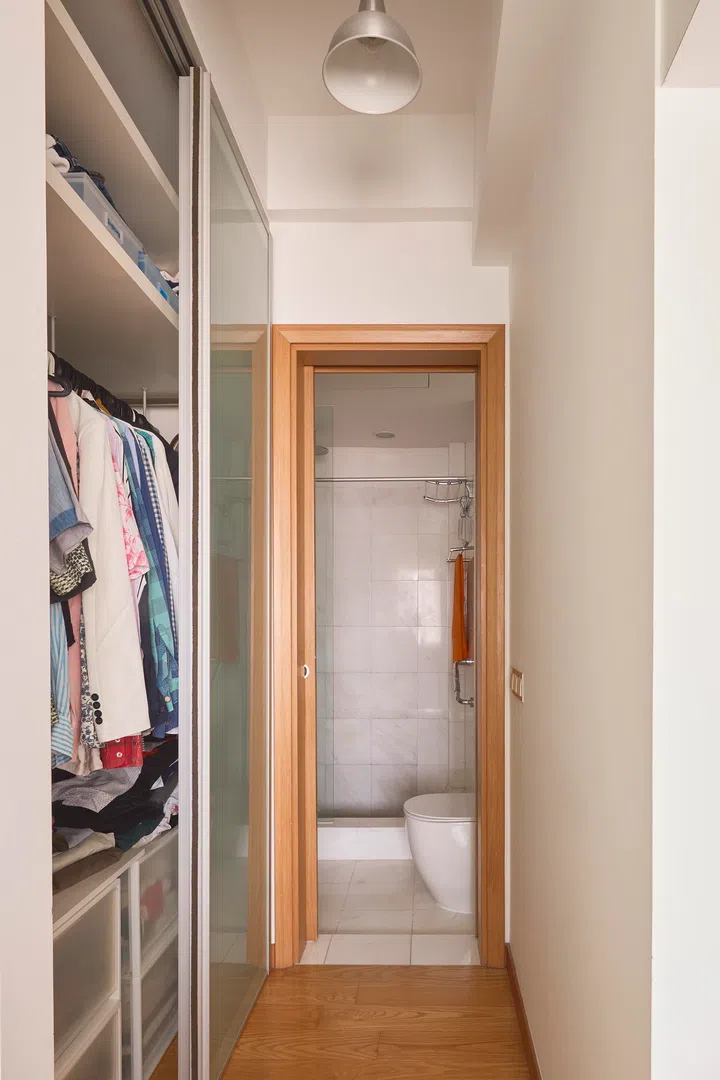
A compact corridor leads from the bedroom to the bathroom, featuring an integrated wardrobe which keeps storage and circulation neatly contained.
Wardrobe
Behind the sleeping area, a compact wardrobe corridor leads to the bathroom, keeping storage neatly tucked away while maintaining the clarity of the main room. As with the rest of the home, the approach is simple and considered—a space shaped by what is needed, and nothing more.
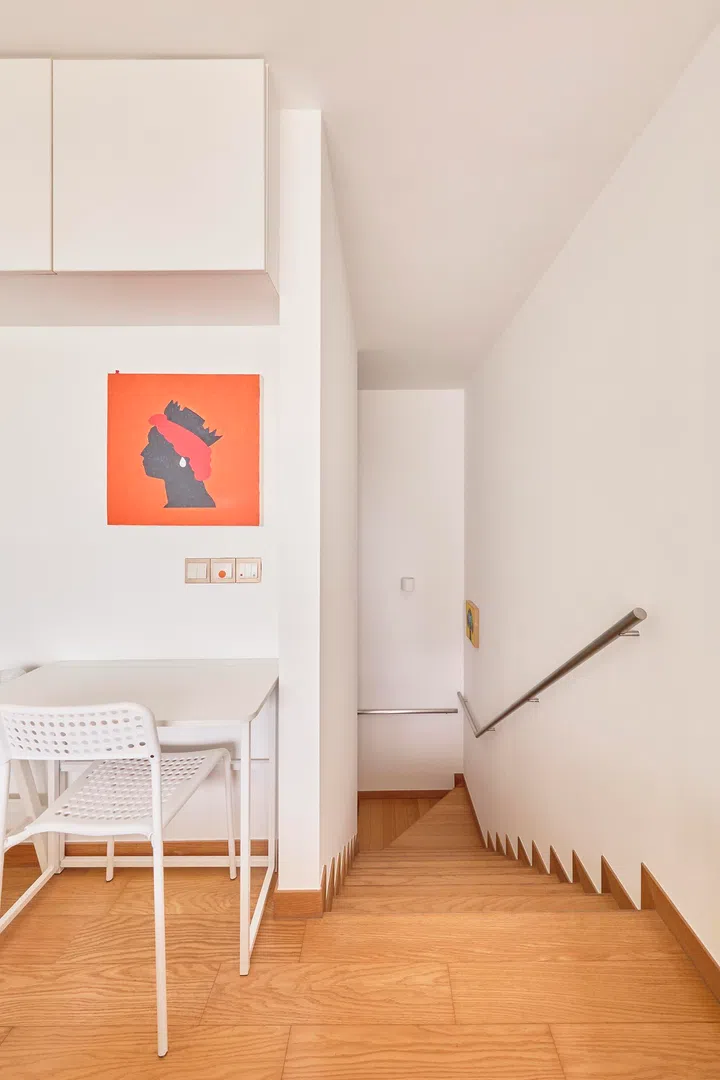
A small desk sits at the stair landing, marking the transition between the private upper level and the living space below.
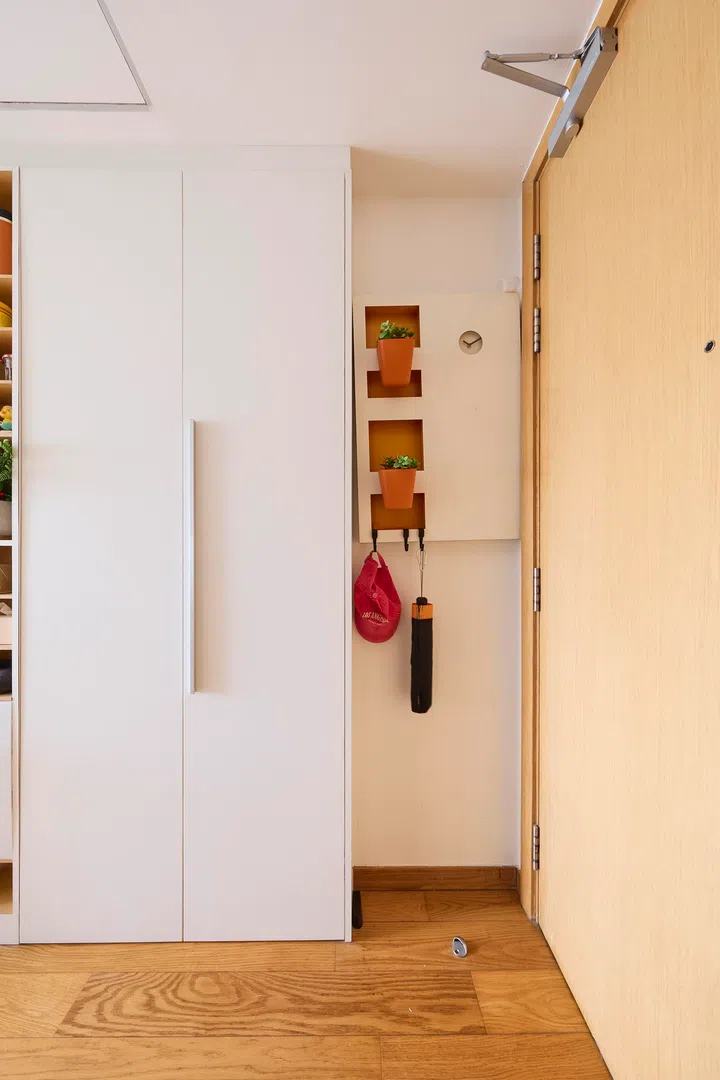
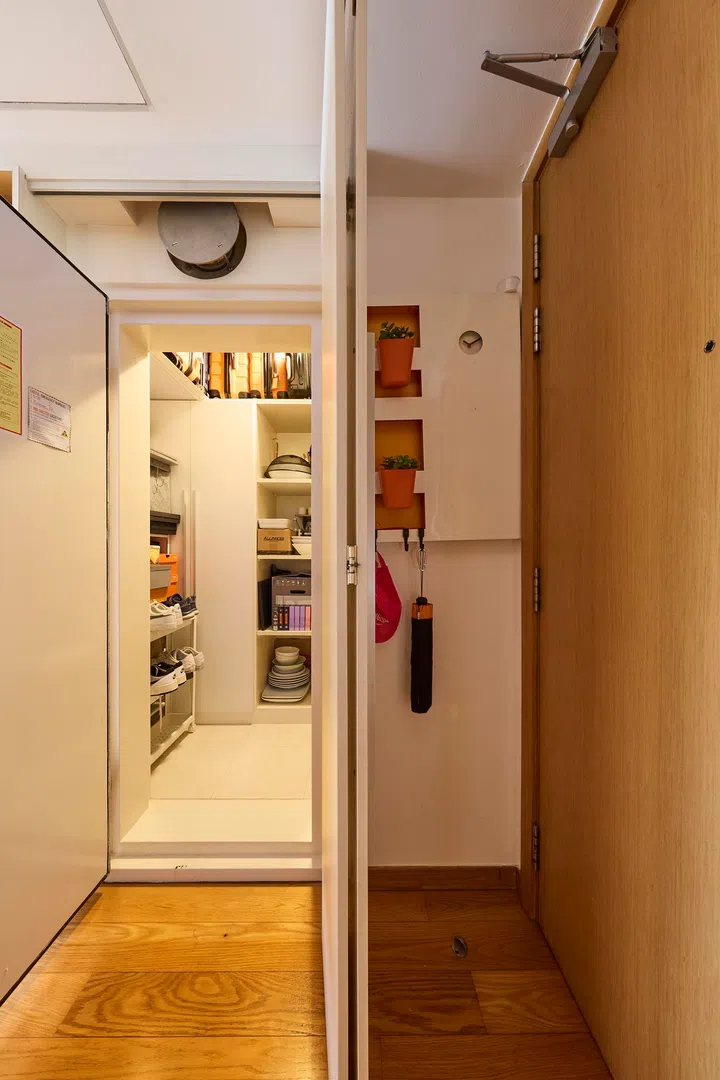
Clean-lined cabinetry at the entry conceals storage, keeping the space neat and uncluttered.
Powder room and storage: Practical and purposeful
Back on the lower level, storage is carefully worked into the entryway, where clean-lined cabinetry conceals the bomb shelter and keeps everyday items out of sight.
What appears minimal at first glance opens up to reveal a highly organised interior, with shelves and compartments arranged to accommodate everything from shoes to household essentials.
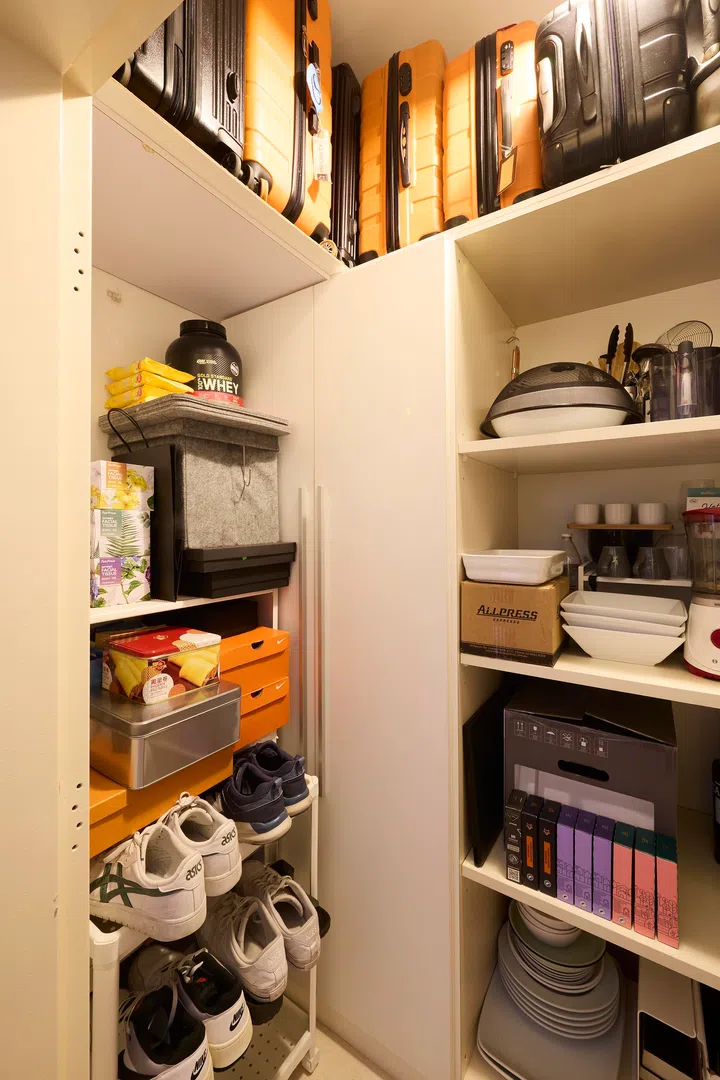
Shelving within the bomb shelter is organised to neatly accommodate shoes, household items and everyday essentials.
“The bomb shelter is something we had to deal with—we made the best use of it by building shelves and cupboards for storage,” Terence shares. Here, it is handled with quiet efficiency, ensuring that the living spaces remain uncluttered while maximising usability.
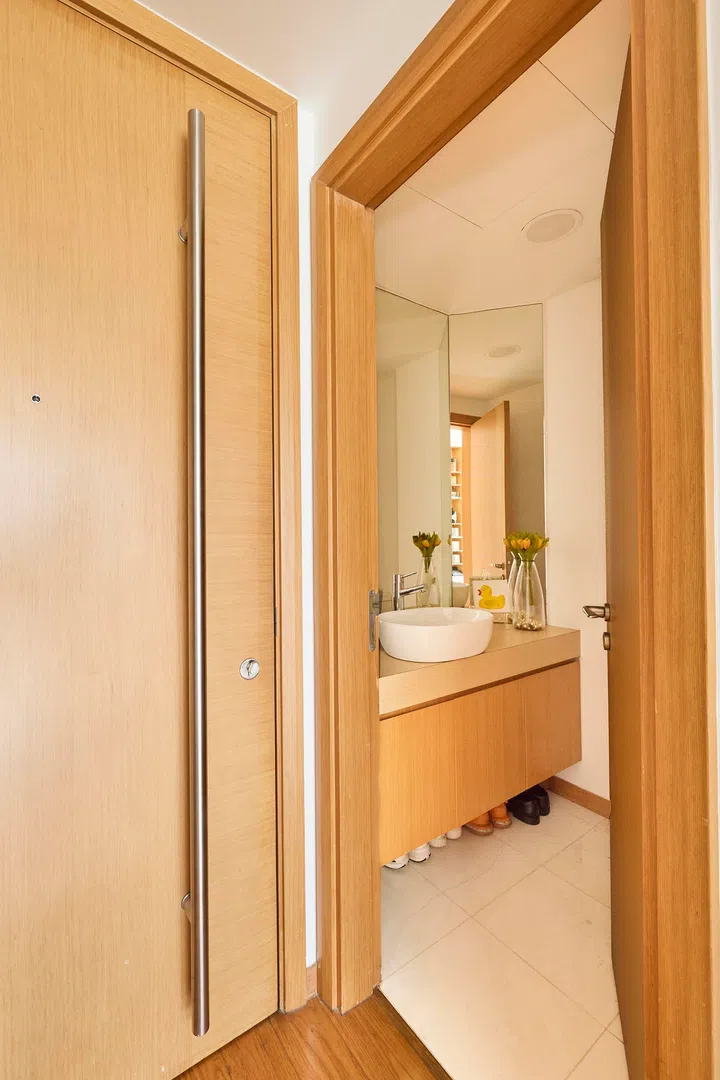
The powder room is kept simple and functional, finished in warm timber tones that echo the rest of the home.
Adjacent to the entry, the powder room continues the same straightforward approach. Finished in warm timber tones, it is kept simple and well-lit, with just enough detail to feel considered without drawing attention away from the rest of the home.
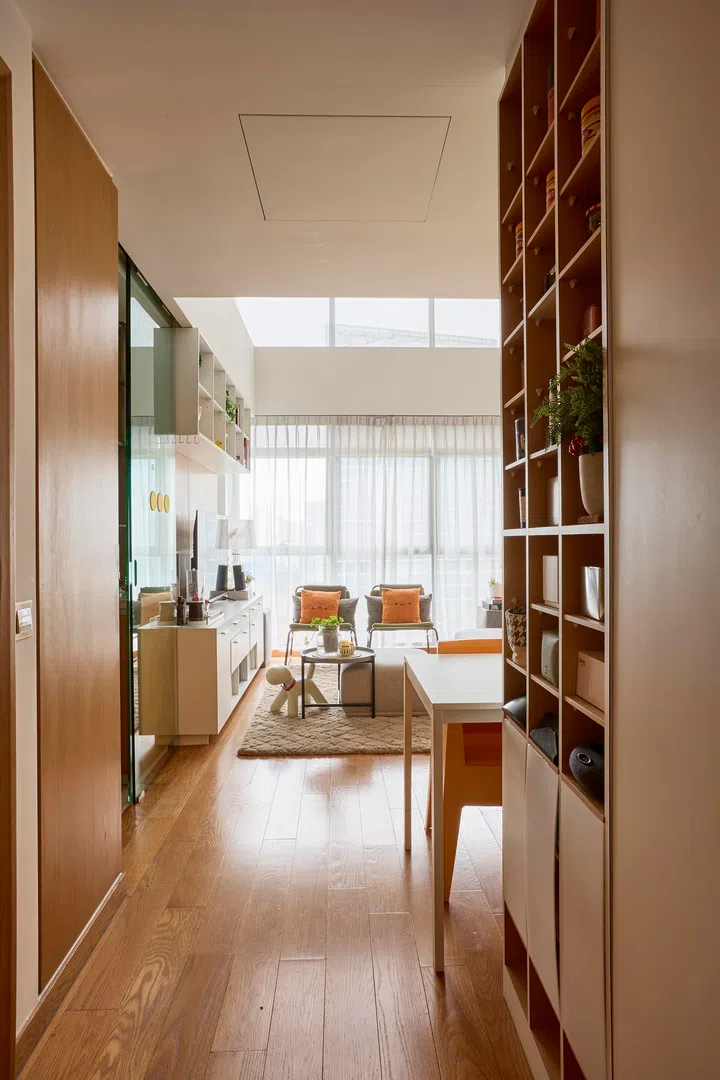
At the entrance, built-in shelving and concealed storage keep everyday items organised, supporting the home’s calm, uncluttered feel.
Less than $50,000 Renovation Cost
After the previous tenants moved out, Terence and Chris refreshed the apartment with a series of carefully planned upgrades totalling less than $50,000. The works were carried out in stages, and included repainting the entire apartment, replacing bathroom wares, installing new blinds in the living room and bedroom, updating the air-conditioning units, and introducing selected furniture pieces.
Some items travelled with them from their Melbourne home, allowing the space to feel both familiar and considered. With Terence’s background in quantity surveying, the process was approached with a clear sense of planning and discipline, ensuring that each update was purposeful while keeping the overall spend measured.
Rather than reworking the layout, the focus was on refining how the apartment is used—keeping it practical, uncluttered and easy to live in over time. Today, it is a home the couple find themselves naturally drawn to. As Terence sums up simply, “We love to be at home.”