
End of an Era: The Story Behind the Closure of Ang Mo Kio Public Library
Built in 1985 to serve a booming satellite town, the iconic standalone library on Ang Mo Kio Avenue 6 has officially closed its doors to prepare for a new chapter inside AMK Hub, making way for future healthcare developments.
By Home & Decor Team -
Share this article
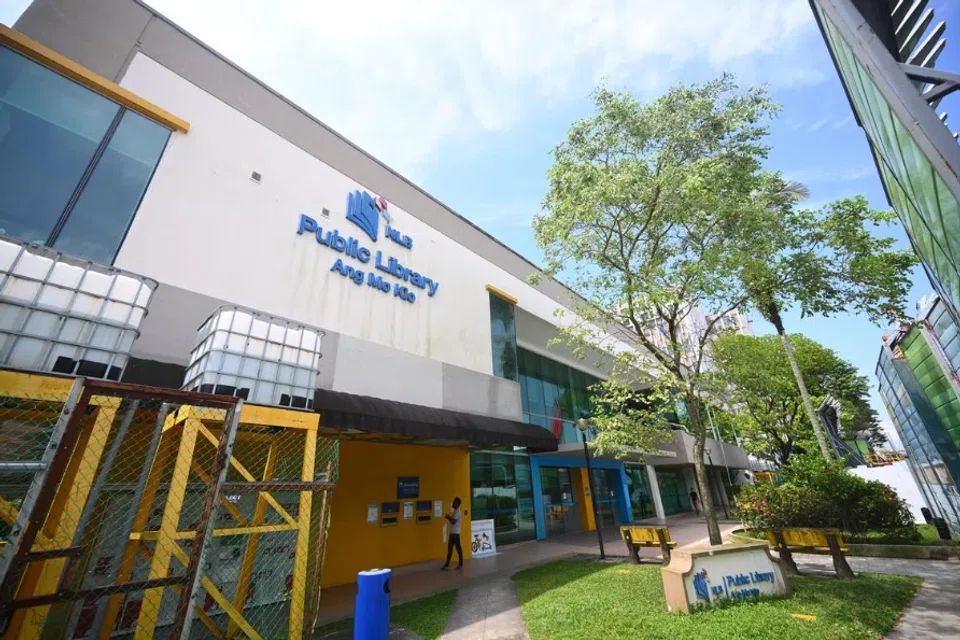
The standalone Ang Mo Kio Public Library—a familiar 2-storey landmark nestled along Ang Mo Kio Avenue 6—officially closed its doors on 31st July 2026 after serving the community for over 40 years.
Built in 1983 - 1985
Planning for the Ang Mo Kio Public Library began as early as 1978 to support the rapidly growing population of Ang Mo Kio, one of Singapore’s major early satellite towns.
Before its construction, local residents had to travel all the way to Toa Payoh to access public library facilities. To bridge the gap while the library was being built, a temporary mobile library service was set up in 1981 at Block 528, Ang Mo Kio Street 52.
Construction on the permanent site began in 1983. The building was officially opened on 17th August 1985 by Mr Yeo Toon Chai, then Member of Parliament for the Ang Mo Kio Constituency, becoming the fifth full-time branch library built in Singapore.
Upon opening, public response was overwhelming. Residents flocked to the library in such huge numbers that borrow queues took more than an hour. The crowd was so dense that library staff had to set up a temporary loan counter inside the building’s garage to manage the queues snaking around the exterior.
Over the decades, the library continuously adapted to match the changing demographic and cultural needs of the neighbourhood.
In September 1995, when the National Library Board (NLB) was established as a statutory board, this building was renamed Ang Mo Kio Community Library.
Indian Library Service
Later in 2002 - 2023, the library closed for a nine-month, $3.5 million renovation. When it reopened in January 2003, it introduced the pioneer Indian Library Service, housing the largest Tamil language collection among all Singapore public libraries at the time.
In a nod to the town’s heritage—where “Ang Mo Kio” is colloquially linked to the Hokkien term for “red tomato”—its second-floor meeting room was officially named the Tomato Room.
Over time, the library introduced dedicated quiet study spaces known as the Learning Loft, interactive children’s activity rooms, ceiling artwork featuring neighbourhood heritage, and 24-hour self-service reservation lockers.
Nostalgic spot for Ang Mo Kio residents
For generations of Ang Mo Kio residents, the distinct white building served as an essential sanctuary for childhood storytelling, examination study sessions, and quiet afternoon reads.
The closure of the standalone building is part of NLB’s nationwide strategy to modernise public library access by shifting standalone facilities into integrated shopping malls and transport interchanges.
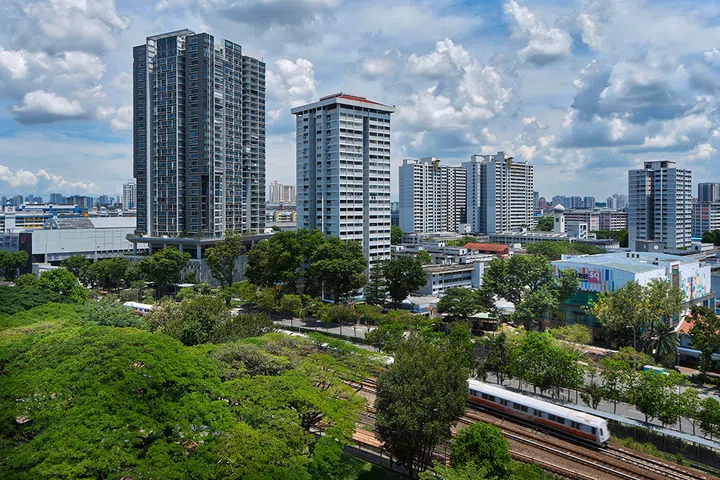
Aerial view of Ang Mo Kio Town Centre.
Libraries in malls, MRTs attract more visitors
Research and visitor analytics demonstrate that libraries co-located inside retail hubs attract significantly higher footfall and offer greater convenience. Siting libraries near MRT stations and bus interchanges helps ensure at least 80% of residents live within 15 minutes of a library via public transport.
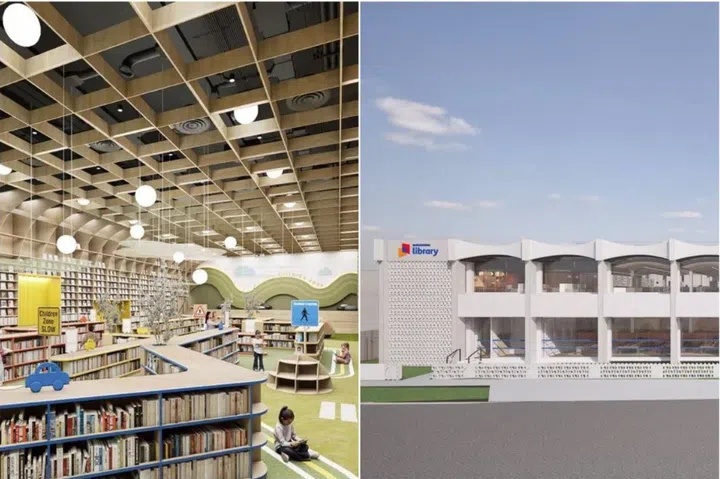
An artist's impressions of the relocated Ang Mo Kio Library (left) and revamped Queenstown Library.
Reopening in AMK Hub
The library will reopen on 20th November 2026 at AMK Hub (taking over the fourth-storey space previously occupied by Cathay Cineplexes). The new location will feature high, tree-like bookshelves, green-inspired reading zones, and digital installations reflecting Ang Mo Kio’s local identity.
Land reused for Healthcare
Under the Urban Redevelopment Authority’s (URA) Master Plan, the 5,300 sqm site at 4300 Ang Mo Kio Avenue 6 has been rezoned for Health and Medical Care use.
Given its location directly adjacent to the existing Ang Mo Kio Polyclinic, the land is expected to be redeveloped into an expanded healthcare or medical facility—such as a specialised clinical annex, nursing home, or eldercare complex—to serve the needs of Ang Mo Kio’s aging population.