
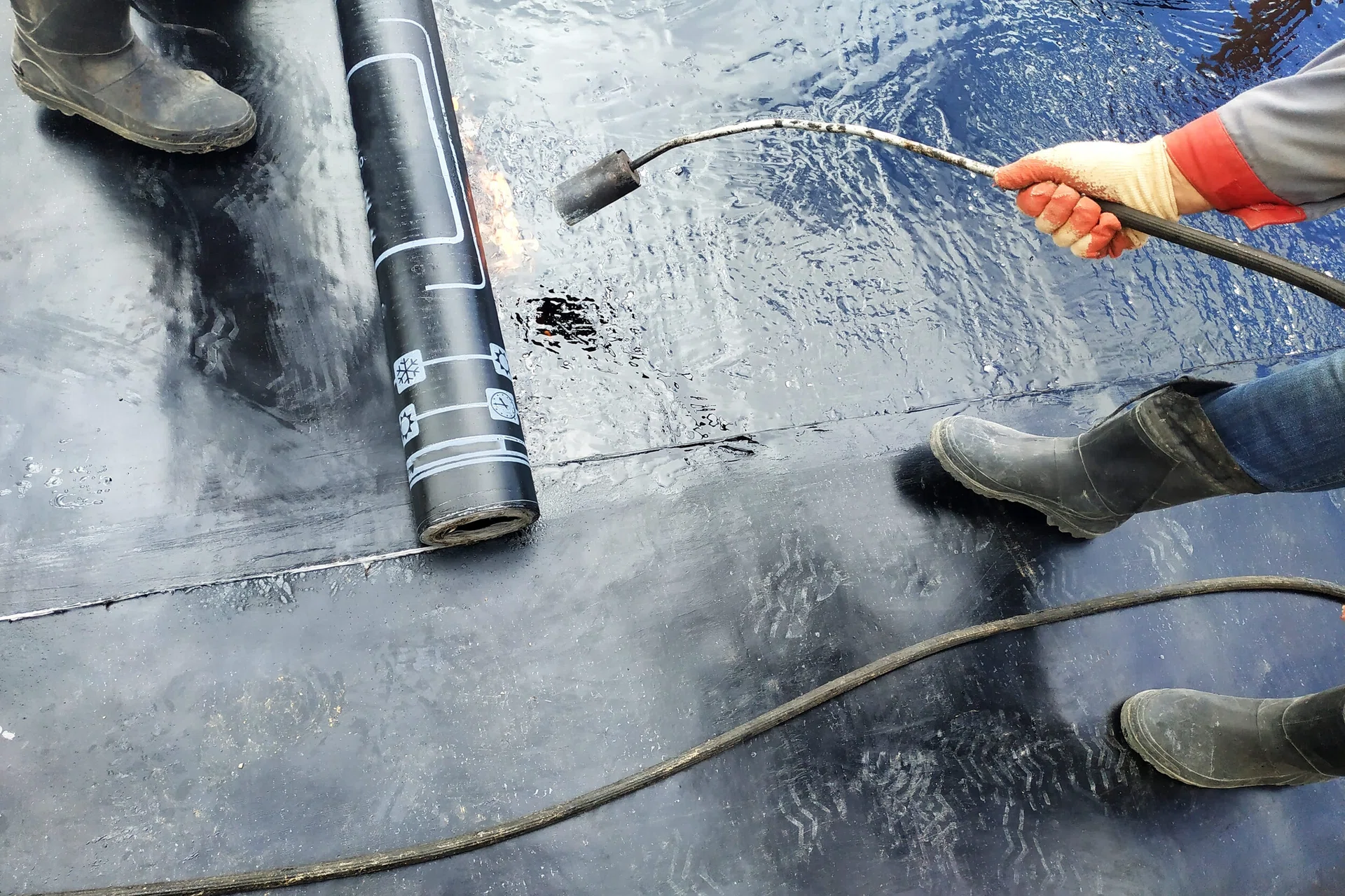
Share this article
As you make your list of expenses to expect when purchasing your HDB, have you remembered this very important one?
It’s one you can’t get rid of… a mandatory expense; a non-negotiable as an HDB homeowner…
Any guesses?
Waterproofing!
Water-what? If you’re a first-time home buyer, have been living with your parents for most of your life, or don’t really know the ins and outs of maintenance costs and the like, this is one expense you can’t shy away from. It’s best you get to know more about this hidden maintenance cost to budget accordingly and expect no disguised costs down the renovation line.
We spoke to an industry expert, Daniel, the founder and CEO of Rooftite Projects. The company specialises in roofing, waterproofing and guttering services.
“Waterproofing is a product and system that is installed and fitted in order to prevent water from ingressing, causing damage to your property and its structure,” he explains.
The Housing & Development Board has strict guidelines if you are renovating your kitchen, bathroom or any other wet zone in an HDB unit. These are non-negotiable.
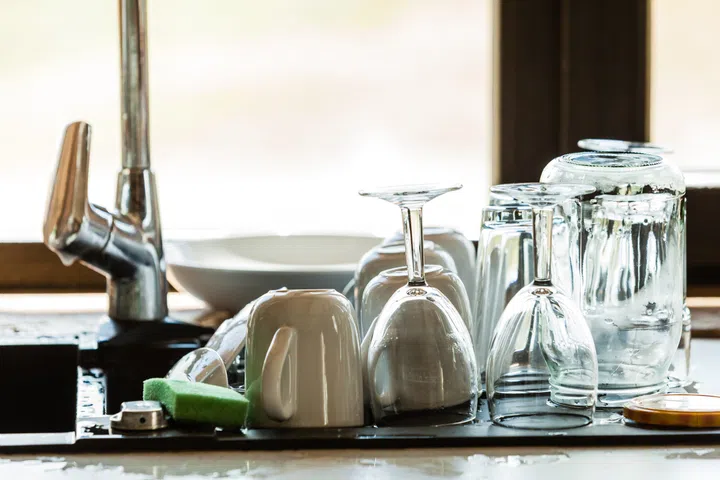
The wet zones
Close your eyes for one second and picture all the various parts of your home that have taps or appliances and home furnishings connected to a water source via pipes and plumbing.
Probably more than you imagined, right?
These are known as the “wet zones” of a home. Typically, the wet zones include the kitchen, bathroom, toilet, washroom, service yard, etc., and any areas where plumbing works are necessary for function, too.
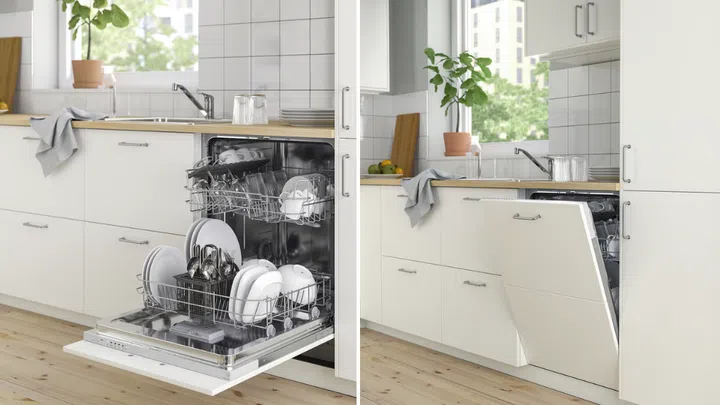
IKEA LAGAN Integrated Dishwashe
For example, in your kitchen, you will need to connect a dishwasher to a pipe/s (including drainage and water supply). In the bathroom, the shower is just one compartment of a few where plumbing is required.
Whenever you’re undertaking any sort of maintenance work or home renovations in a wet zone, mandatory HDB waterproofing work is required.
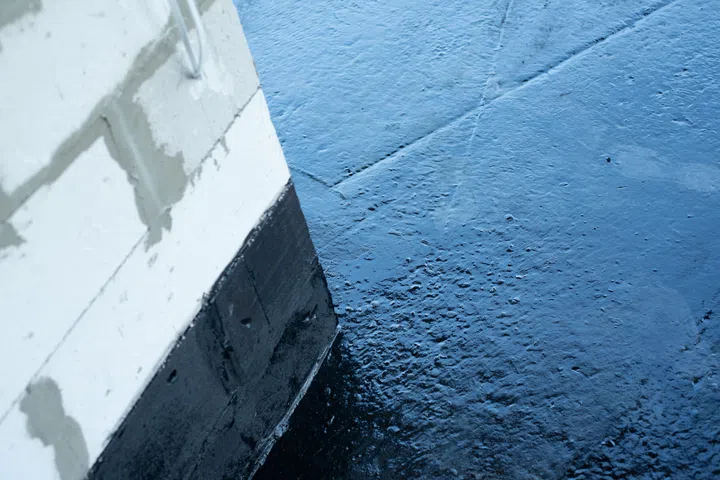
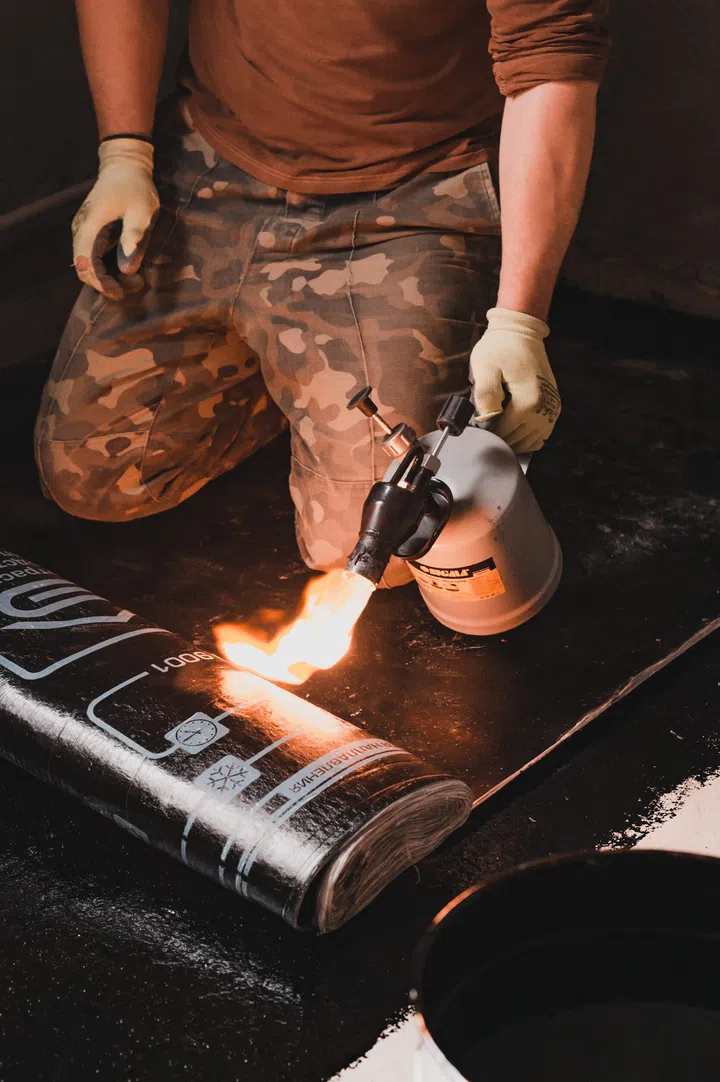
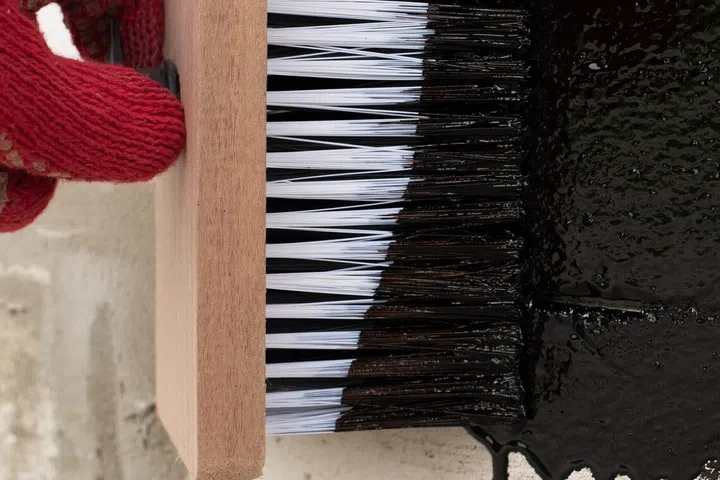
Floor covered with a layer of waterproofing mastic.
What is waterproofing?
“First and foremost, waterproofing is a constant maintenance that should be done every five to 10 years. It’s not invincible; every waterproofing system has a sell-by date.
The system is applied to prevent water from getting into any areas that can lead to water damage. If your waterproofing system fails, then essentially the other parts, like paintwork or spalling, begin to fail, and that’s when it becomes excessively expensive,” Daniel explains. “If done correctly, you shouldn’t have to worry about it for the next 10 years or so.”
Why is it important?
Waterproofing ensures that the structure of your home stays in shape. But it can also have an adverse effect on your health.
“It’s important to maintain the longevity of your property. But if not attended to, there are many risks that are detrimental to your health. It can also lead to electrical or structural faults. You’re dealing with water here, which causes a lot of damage,” tells this expert. “It’s an extremely important part of your home; without it, the structural integrity starts to diminish.”
How can proper waterproofing save you in the long run?
As a homeowner, it can feel like an unnecessary added expense. But waterproofing can end up saving you hundreds of Singapore dollars down the road. That’s why the HDB has made it a mandatory expense!
“When your waterproofing is strictly up to standard and is as sound as it should be, you are basically preventing structural damage from occurring. You might see a little bit of water penetrating your ceiling or water rising on your walls in your shower as something minuscule. But that leads to further and much costlier damages down the line if you leave it,” tells Daniel.
“Leaving it means your structure and foundation get damaged, as well as electricals. This will end up costing you much more to fix than waterproofing. Remember, prevention is better than cure.”
When do I need to do HDB waterproofing?
We covered the wet zones. But how do you know when waterproofing work is needed?
HDB waterproofing is required for:
- Replacing, gutting or renovating kitchen floor tiles
- Replacing, gutting or renovating bathroom floor tiles
- Replacing, gutting or renovating toilet and the area or tiles around it
- Replacing plumbing fixtures
HDB kitchen waterproofing
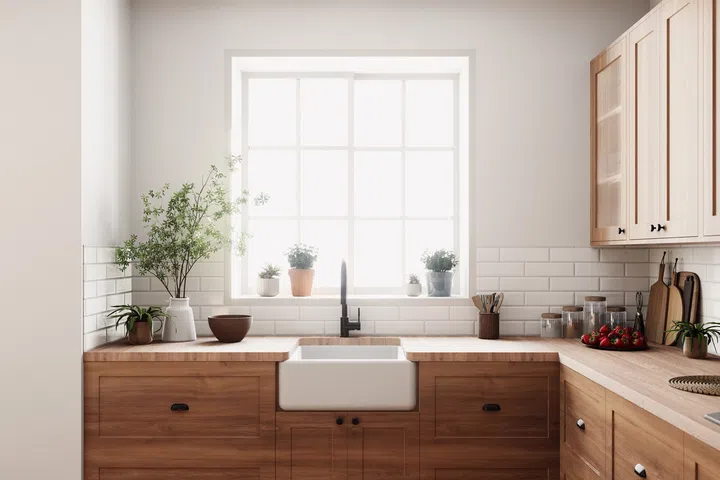
Owners of landed properties in Singapore have a little bit more flexibility with building constraints. However, HDB homeowners are not allowed to have any pipes installed into kitchen floors – whereas in a landed home kitchen, you can. Instead, pipes are installed into the walls.
But isn’t waterproofing for floors? Yes, it is! But that doesn’t mean that if a wall pipe bursts, it won’t leak down the wall and into your floor. This is why HDB kitchen waterproofing is a must!
The HDB states that during renovation or upgrading kitchen works, HDB waterproofing is required for the following floor finishes:
- Ceramic
- Marble
- Homogeneous
- Terrazzo
- Parquet/ timber
- Other tiles
Mandatory waterproofing conditions include using a pre-packed waterproofing screed for the kitchen and/or open balcony before laying your new floor tiles/finishes.
The Housing and Development Board also has stipulations for the waterproofing membrane HDB:
The waterproofing expert explains what waterproofing membrane is in layman’s terms.
“It’s a cloth that you can think of as a protection, like that of a band-aid. Your membrane prevents water from penetrating your substrate – that’s the structural base.”
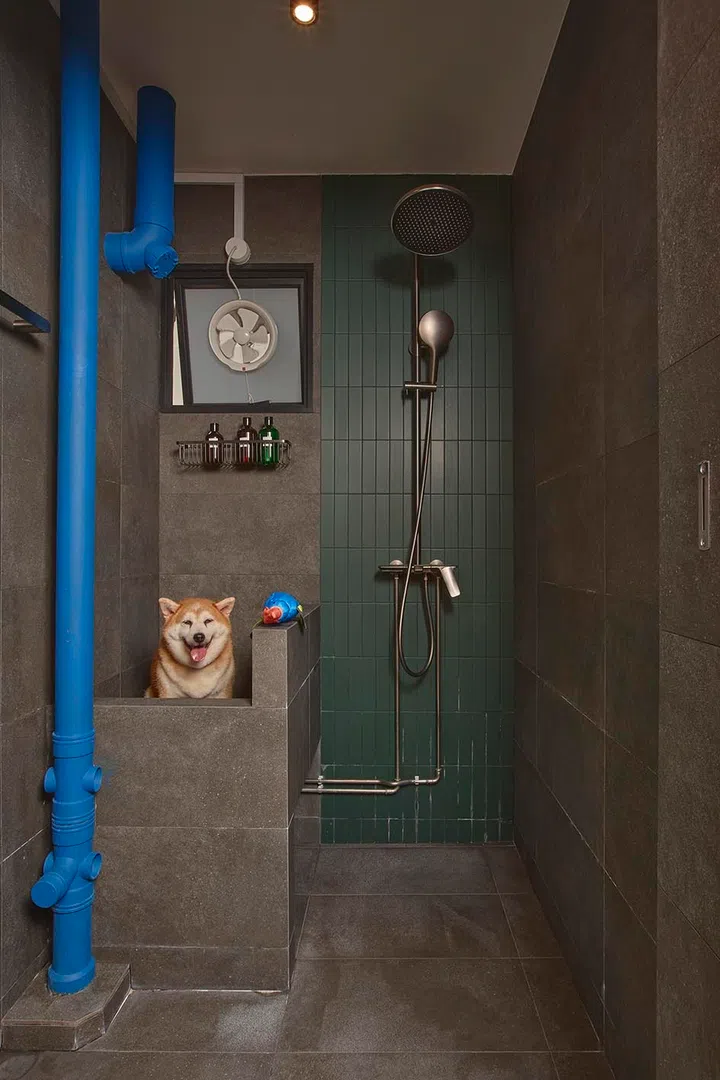
A part of the wet bathroom is solely for Ran Ran, where she has her very own wash station.
HDB bathroom waterproofing
We’re all familiar with the not-so-pretty PVC piping that, unfortunately, is not allowed to be removed from HDB housing. Owners and interior designers have come up with smart solutions for “disguising” the pipes. Even painting them from white to a different colour to better blend in with a bathroom.
But these are part of the property’s drainage and sanitary plumbing system. They can leak due to wear and tear, age, etc., and end up causing floor leaks.
Many bathrooms comprise a toilet, vanity and shower as part of one room. Some homes have a separate toilet, too. HDB toilet waterproofing is essential. Apart from the pipes, because bathrooms have many tiled parts to them, tiles as well as the grouting between them can lead to leaks. This is why HDB bathroom waterproofing is non-negotiable!
Stipulations as per HDB regulations are the same for bathrooms and toilets, using a pre-packed waterproofing screen and waterproofing membrane in the bathroom/toilet before laying new flooring. The Housing and Development Board states that:
The 3-year bathroom & toilet hacking clause
For new HDBs (3 years and below since the development/block’s date of completion), legally, you are not allowed to replace or remove any bathroom/toilet floor finishes.
When do the HDB waterproofing rules apply?
Planning on buying an HDB and renovating your kitchen and/or bathroom? HDB waterproofing rules apply (bearing in mind the HDB 3-year bathroom/toilet hacking clause). It’s a mandatory maintenance cost you will have to pay.
Purchasing an HDB doesn’t mean you have to renovate, though. If renovations are a future pipeline plan, it’s at least good to know so you can budget accordingly.
Not renovating but wondering when waterproofing your HDB might be necessary?
Remember: mandatory waterproofing applies to maintenance work as well, not just renovations. For example, if you need to suddenly replace your bathroom tiles or a sink because of a leak.
How to know when maintenance waterproofing work is required?
“If water starts getting behind your waterproofing, even if it’s a small section, it will start to cause peeling, lifting and bubbling. Once that starts to happen, your waterproofing loses its binding,” says Daniel.
How to tell if HDB waterproofing is needed in your home? It can be more common in older flats because of age.
Other signs to look out for include:
- A damp, musty smell in your bathroom, toilet or kitchen
- You notice water puddles gathering on the floor
- Peeling wall paint
- Yellowish stains on your bathroom, toilet or kitchen walls
- Efflorescence (white, powdery or salt-like deposit) patches on bathroom, toilet or kitchen walls
- Mouldy grout lines
- Your neighbour’s ceiling below you starts to show water stains or peeling
“Black and yellow mould stains are the most common. Also keep an eye out on all pipework in the bathroom and kitchen. Waterproofing in bathrooms and kitchens isn’t usually visible, which makes it trickier to identify if there’s failure. But what’s important is checking out grouting and the silicone between surfaces in these rooms,” says the waterproofing expert.
“If these parts start to look chalky or you start to see paint showing signs of bubbling, that probably means there is water in the system, and your waterproofing has failed.
Use a licensed contractor
Save yourself the headache and hire waterproofing contractors listed on the HDB’s Directory of Renovation Contractors (DRC) or the Building and Construction Authority (BCA).
These contractors specifically work with the HDB’s precise requirements and provide a legitimate HDB waterproofing warranty.
How long does waterproofing work take?
Bathroom and kitchen waterproofing work typically takes between two to three days.
“For a standard bathroom, it will take two to three working days because you have to use cementitious products, which need to dry, then recoat, and that sort of thing. These waterproofing products are used in areas that are going to be tiled over, such as your bathroom and shower,” details Daniel.