
3 New Rules of Renovations in Singapore: Tactility, layering, and lasting design
Interior design and renovation trends in Singapore are undergoing a major shift as homeowners and commercial designers seek spaces that balance aesthetic appeal with practicality.
Share this article
Today’s renovations are moving away from surface-level aesthetics toward tactile experiences, durable materials, and thoughtfully layered palettes.
Insights shared by Chers Lee, Showroom Brand & Customer Relations Executive, along with trend forecasts from Jansen Tan, Director of Product & Brand at Lamitak, offer a clear picture of how surface choices and spatial design are evolving.
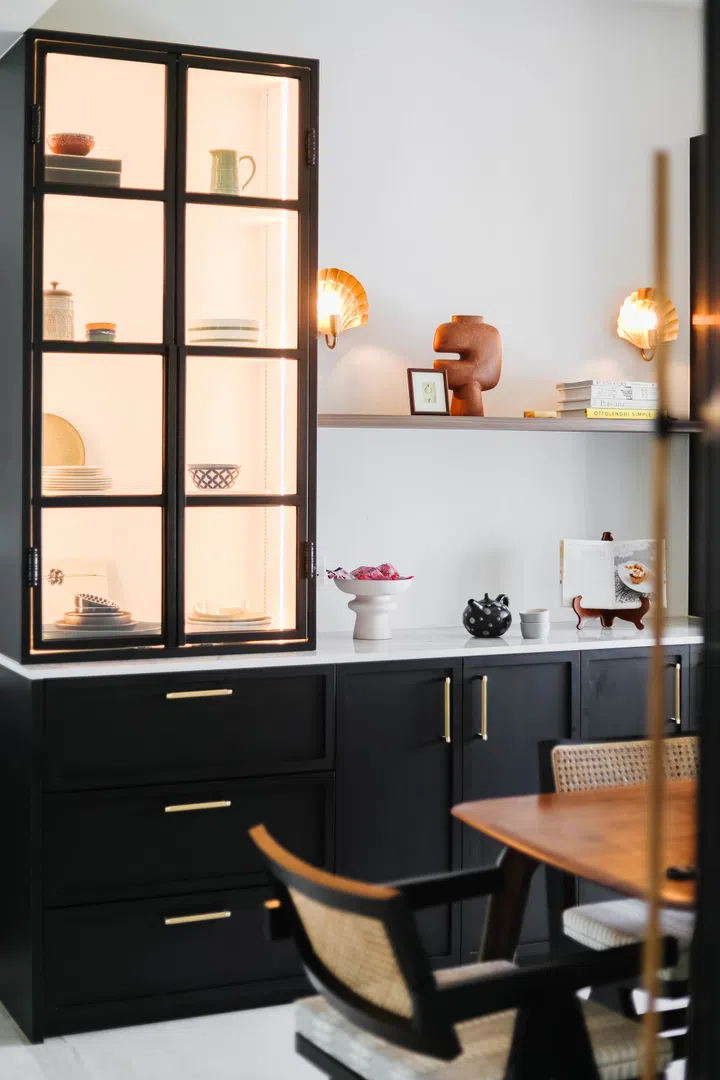
Make Room, boutique interior design and styling agency, features Lamitak’s PROTAK range in Black Pro.
Touch & Tactility
A central shift in current renovation preferences is the growing importance of touch.
As Lee observes, “One of the biggest shifts I have noticed is that tactility has become much more important. Clients increasingly want to touch a surface before they even ask about the colour. How something feels is now very much part of the decision-making process.”
Softer, organic looks
Matte, low-sheen, and textured finishes have surged in popularity because they align naturally with softer, organic interior concepts.
Beyond aesthetics, functional surfaces are addressing daily practical concerns in high-touch areas like kitchens, wardrobes, counters, and cabinetry.
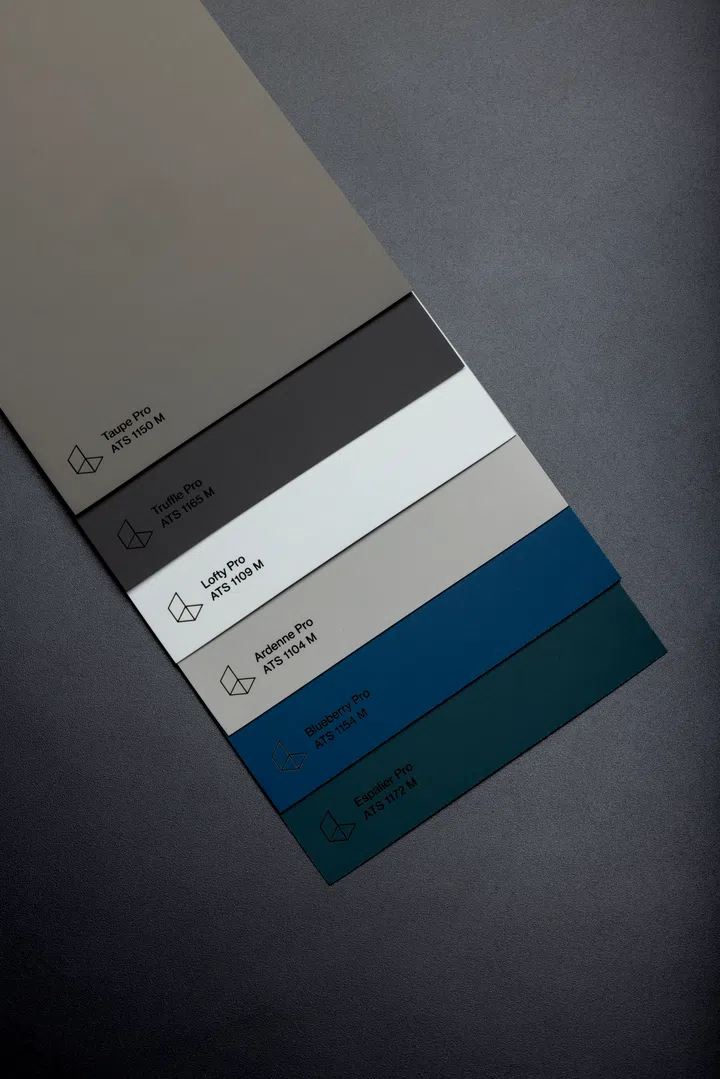
Lamitak PROTAK Series
Anti-fingerprint surfaces
Options such as Lamitak’s PROTAK series - featuring anti-fingerprint, anti-bacterial, anti-fungal, anti-glare, scuff-resistant, and stain-resistant properties - give homeowners the confidence to incorporate darker tones and matte finishes without fearing constant maintenance.
Lee points out that “anti-fingerprint performance in particular gives clients greater confidence to explore darker colours and matte finishes that they may previously have considered harder to maintain.” Meanwhile, gloss and metallic finishes are used far more selectively, with Lee noting that “rather than dominating an entire space, they tend to appear as accents or highlights within a broader material palette.”
Laminates On Unexpected Surfaces
Laminates are also breaking out of traditional confines like kitchen cabinets and closet doors.
“Laminates are no longer being confined to kitchens or cabinet doors. Increasingly, people are treating surfaces as part of the overall spatial design rather than simply as a finishing material,” explains Lee.
Residential laminates
On the residential side, clients are applying laminate finishes to feature walls, TV walls, wardrobe fronts, and entryway cladding. Fluted panel applications are widely requested because they bring visual rhythm and depth without requiring extra decorative treatments, while large-format sheets are favoured for minimising visible joints over extensive surface areas.
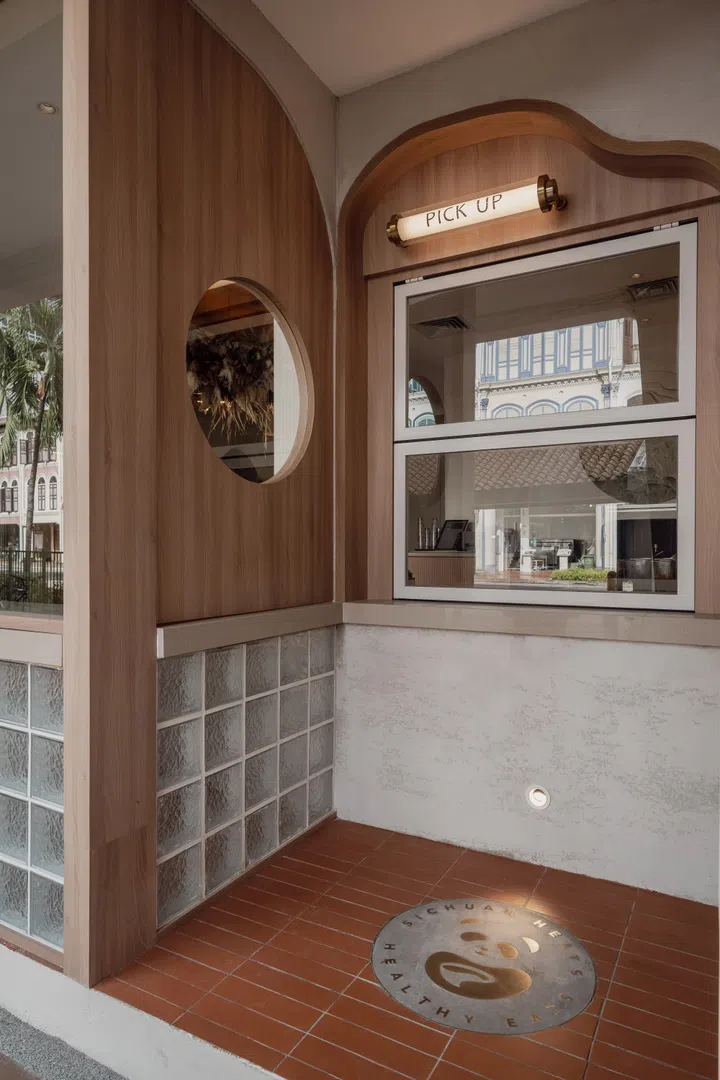
Chengdu Bowls restaurant design by Spacebar Design.
Commercial laminates
In commercial settings - such as reception counters, retail displays, office walls, and F&B interiors - the emphasis pivots toward durability.
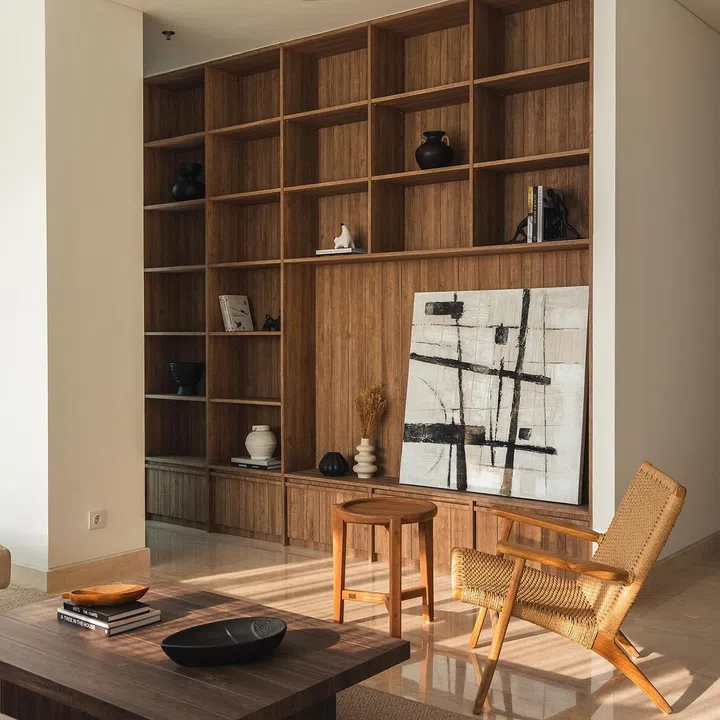
Arka Construction using Runa Nevada Elm from Lamitak.
As Lee explains, “Durability becomes especially important because these are high-traffic environments where surfaces are constantly being touched, knocked or exposed to daily wear.”
She adds, “What works well for a wardrobe front may not necessarily be appropriate for a counter or high-contact surface, so we usually look at each requirement individually.”
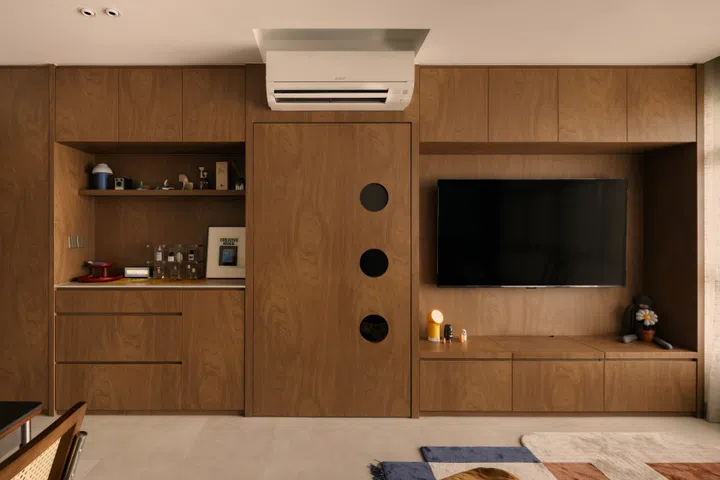
Ned Eichler Wood for TV console and home bar wall.
3 Popular Laminates
When looking at overall popularity, three laminate designs consistently stand out: Microcement in Microdots, Eichler Wood in Sugi, and Cloudy Cement in Brushstrokes.
Among these, Microcement has emerged as an undisputed bestseller since its launch in late 2023.
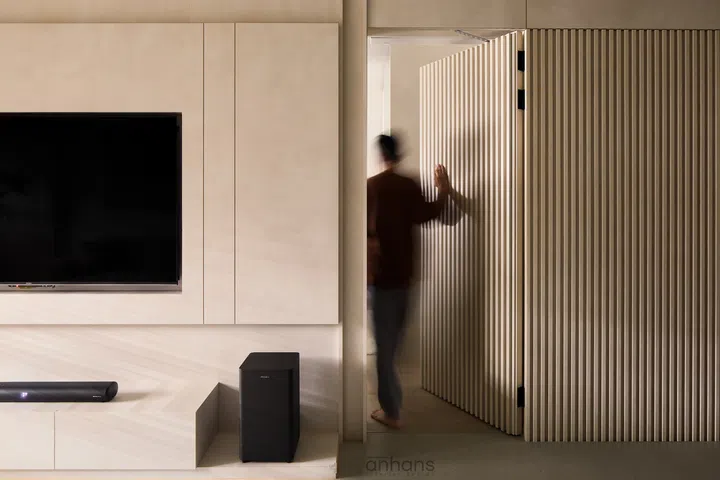
Anhans Interior Design utilised the Salt Microcement laminate for this living room.
Speaking on its widespread appeal, Lee says, “If I had to choose one, it would be Microcement... I think its appeal comes from how easy it is to work with. It can sit comfortably in a contemporary apartment, a more classic home or even a commercial environment without overpowering the rest of the design.”
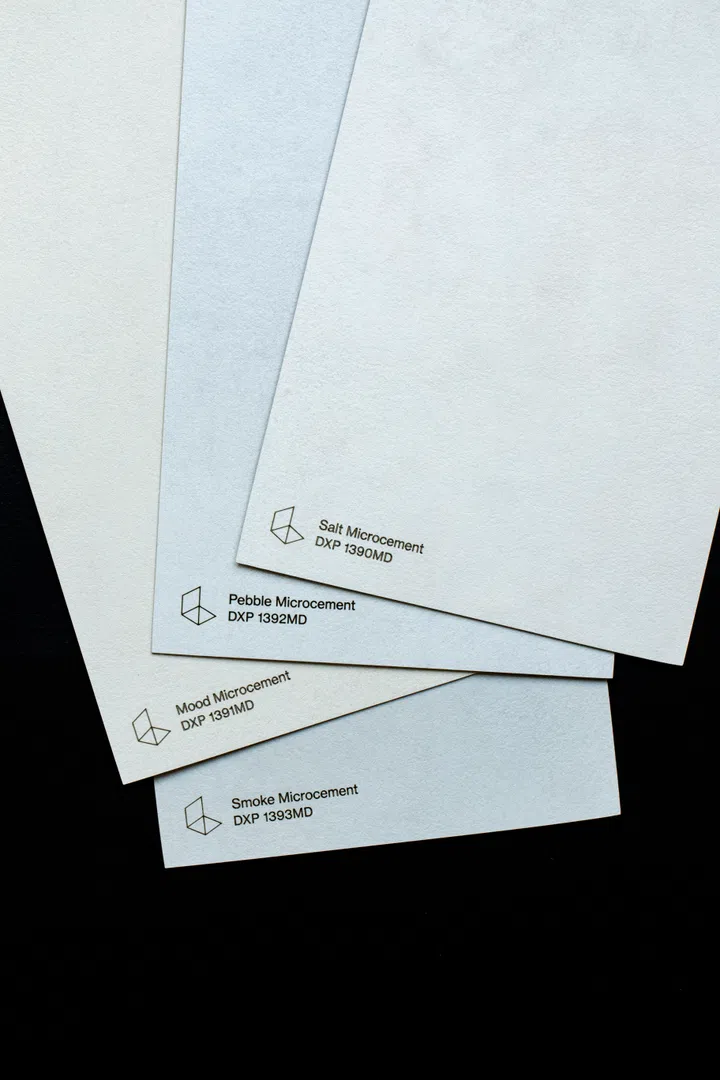
Lamitak Microcement Series has been a popular choice amongst homeowners in Singapore.
She notes that its versatile neutrality allows it to pair seamlessly with woodgrains, stone, metal, or stronger colour accents.
Highlighting its quick uptake, Lee adds, “Normally, it takes some time for clients to build confidence in something new, but Microcement is one of those surfaces that people often respond to as soon as they see and touch it.”
While homeowners often evaluate whether a design will still feel relevant in five years, commercial designers focus on how different surfaces come together so that “the colours, textures and materials create a consistent visual language throughout the space.”
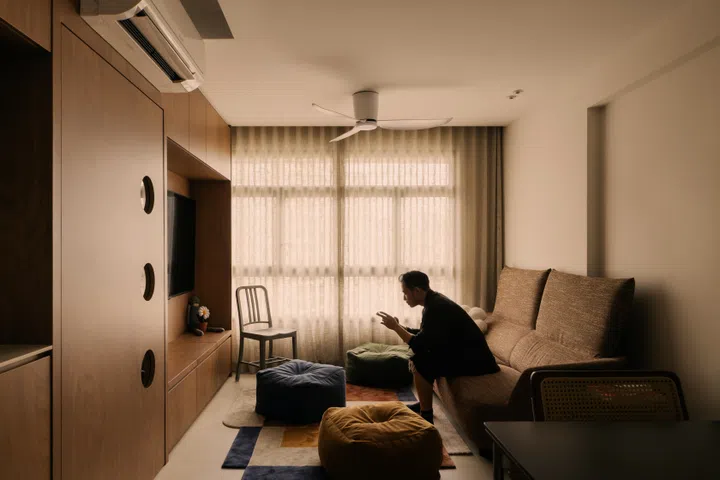
Jansen Tan, Director of Product & Brand at Lamitak, forecasts that interior designers in 2027 will "move towards warmer, more nuanced palettes rather than very stark or uniform interiors." Above, is the Ned Eichler Wood from Lamitak.
Renovation Forecast for 2027
Looking ahead toward 2027, the trend trajectory is shifting away from stark, uniform interiors toward warmer, nuanced palettes.
Forward-thinking designers are becoming increasingly adventurous with material combinations, layering warm woodgrains alongside textured solids, stone-inspired surfaces, and expressive colour accents.
Rather than being defined by a single dominant colour or finish, future renovations in Singapore will be defined by contrast, texture, and character - creating spaces that feel simultaneously calm, timeless, and full of personality.