
Share this article
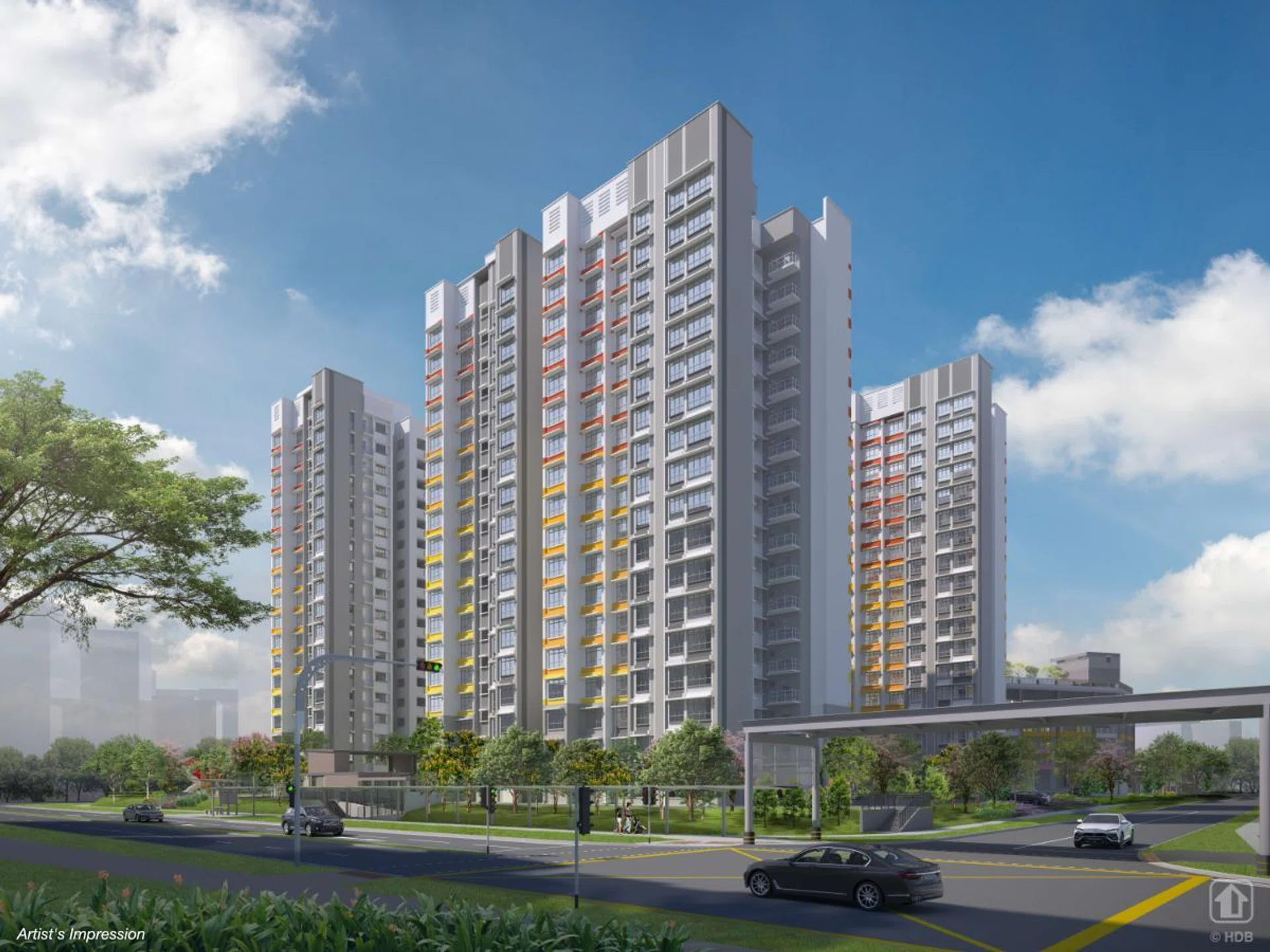
The upcoming Merpati Meadow BTO development at the junction of Jalan Anggerek and Merpati Road in Geylang (District 14) is slated to be one of the most smallest yet contested sites in the HDB November 2026 BTO sales exercise.
The absence of larger unit types like 5-room or 3Gen flats naturally excludes multi-generational households, while the low supply of 271 4-room units practically guarantees fierce ballot competition and high oversubscription rates.
Young couples, professionals working in the city center, and eligible singles or seniors eyeing the 2-room Flexi units will find the location exceptionally practical, provided they are comfortable planting deep roots and stay here for 10 and more years.
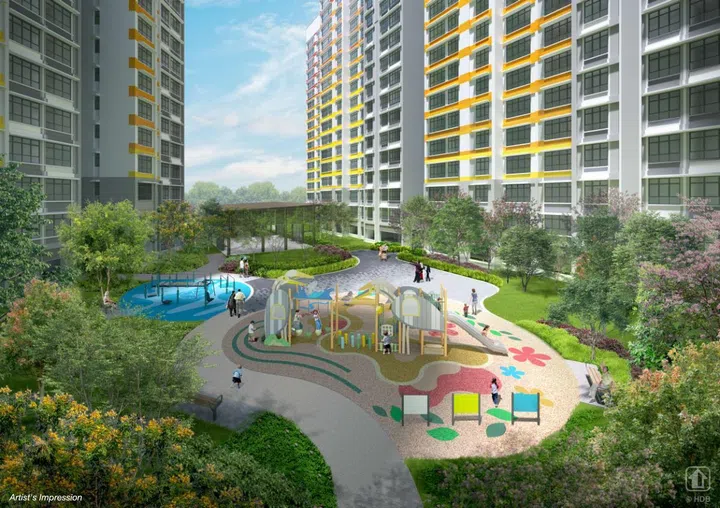
Merpati Meadow will offer a range of facilities including children's playgrounds, fitness stations, a precinct pavilion, and a preschool at the ground level of the Multi-Storey Car Park (MSCP).
Nestled within the established MacPherson estate, the project delivers a modest supply of 438 residential units, split between 2-room Flexi and 4-room flats. Because of its city-fringe location and proximity to public transport, the development likely falls under HDB’s Plus model, making it suitable for long-term stays rather than short, 5-year flippers.
- Address: Jalan Anggerek & Merpati Road
- Total Units: 438 units
- Unit Types: 2-room Flexi (167 units) and 4-room (271 units)
- Waiting Time: 39 Months (3 Years, 3 months)
- Category: Plus
- Minimum Occupation Period: 10 Years
- Subsidy clawback: 8%
- Nearest MRT Station: Mattar MRT Station (Downtown Line)
Prices
| Unit | Price (99-year lease) |
|---|---|
| 2-room Flexi (Type 1) | $253,000 - $300,000 |
| 2-room Flexi (Type 2) | $306,000 - $378,000 |
| 4-room | $545,000 - $726,000 |
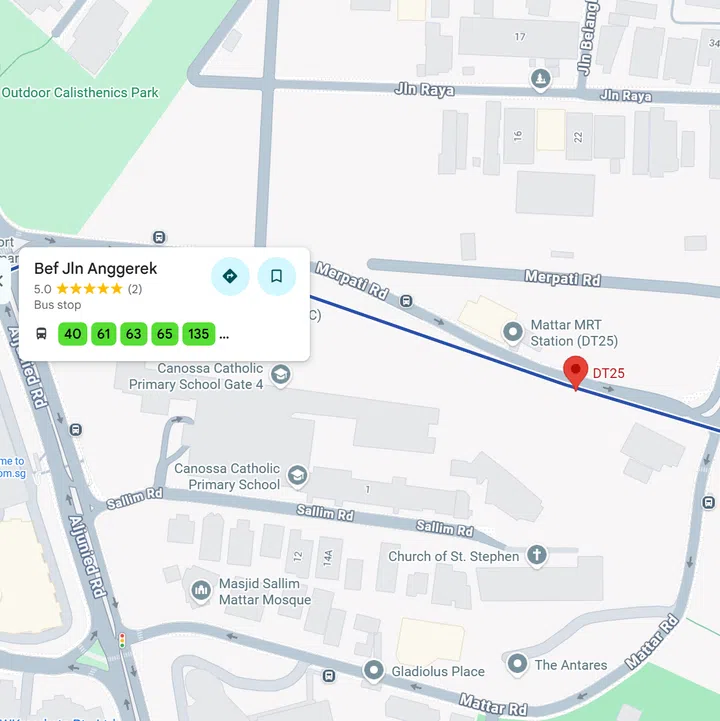
Right in front of the upcoming Geylang Jalan Anggerek BTO site is an existing bus stop. It's also a short 3-minute walk to Mattar MRT Station.
Great Location
Location and daily convenience serve as the development’s strongest selling points. Commuters benefit from being just a short walk from Mattar MRT Station on the Downtown Line, which provides direct, transfer-free connections to key business hubs including Bugis, Chinatown, and the Marina Bay financial district.
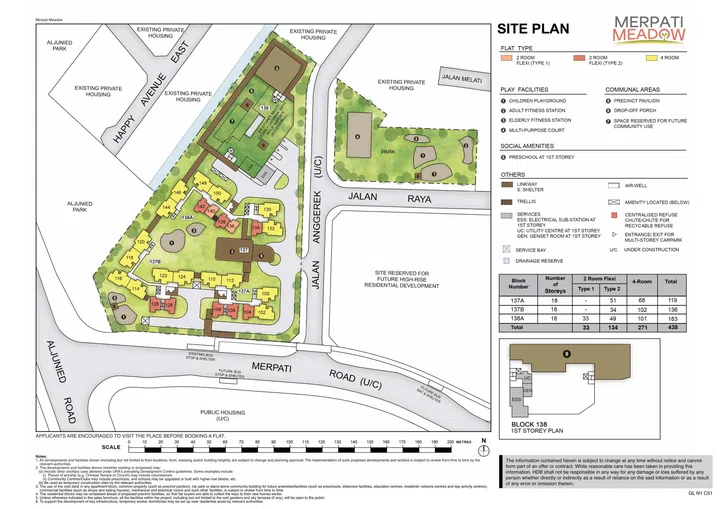
Merpati Meadow BTO site plan.
A single stop down the line connects directly to MacPherson interchange on the Circle Line, while drivers have immediate access to the Pan Island Expressway and the nearby Paya Lebar Central commercial cluster.
Surrounding the site is a vibrant mature town fabric complete with beloved food enclaves, such as the Circuit Road hawker centres and wet markets.
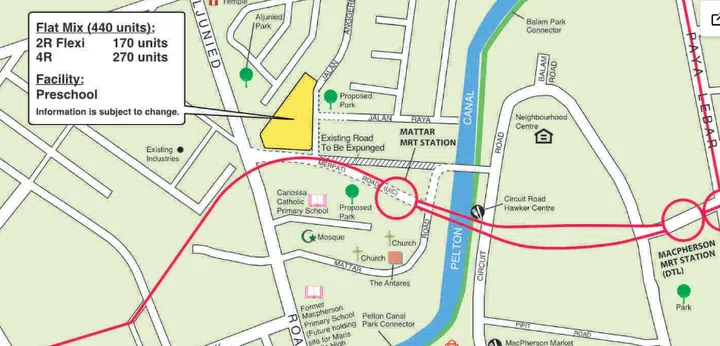
This upcoming November 2026 BTO development in Geylang is bounded by Jalan Anggerek and the under-construction Merpati Road.
URA Draft Master Plan 2025
Under the framework of the URA Draft Master Plan 2025, the Merpati Meadow BTO located along Jalan Anggerek and Merpati Road precinct sits within a key transitional belt poised for significant long-term urban rejuvenation.
The Master Plan emphasizes intensifying land use around mass transit nodes and transitioning older industrial fringes into high-value, mixed-use commercial and residential zones along the Kolam Ayer, MacPherson, and Paya Lebar corridors.
Benefits from Paya Lebar Airbase Relocation
Crucially, the precinct stands to benefit from the broader transformation surrounding the relocation of Paya Lebar Airbase beginning in the 2030s, which will lift aviation-related building height restrictions across District 14 and unlock massive redevelopment potential for surrounding brownfield sites.
Complementing this is the ongoing revitalization of the Kallang River corridor and Pelton Canal park connector network, which aims to enhance active mobility, green connectivity, and waterfront public spaces linking MacPherson directly to Kallang Basin and the central urban core.
Pre-Schools, Primary Schools
For young families and prospective parents, the immediate educational ecosystem offers clear doorstep advantages alongside a defined set of choices.
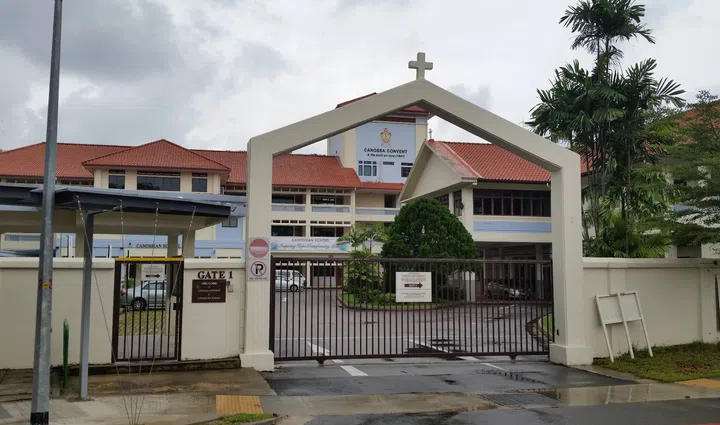
Directly adjacent along Jalan Anggerek and Sallim Road is the Canossian Village, which houses Canossa Catholic Primary School - a co-educational institution that falls well within the crucial 1 km home-school priority zone for Primary 1 registration.
Depending on the final cadastral boundary of the Merpati Meadow BTO parcel, Geylang Methodist School (Primary) along Geylang East Central also sits roughly around the 1 km threshold, while notable institutions such as Cedar Primary School, Maha Bodhi School, and Kong Hwa School sit within a 1 to 2 km radius.
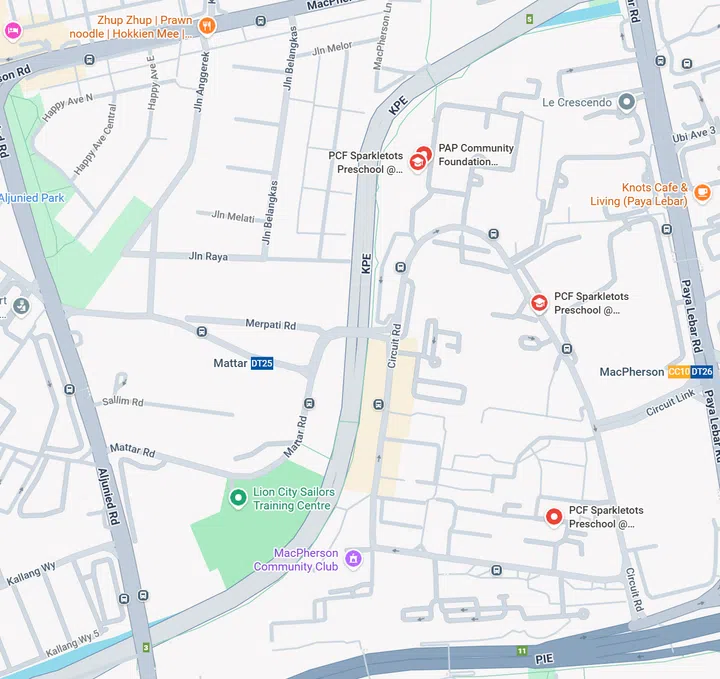
Nearest PCF Sparkletots are located closer to the Circuit Road and MacPherson areas.
On the preschool front, early childhood options are tightly woven into the surrounding MacPherson estate.
Families have access to affordable anchor and partner operator centres, including PCF Sparkletots preschools located at the void decks of Circuit Road, alongside early learning facilities within the Canossian enclave itself, such as Magdalene’s Kindergarten, and commercial child care centres situated along the MacPherson commercial belt.
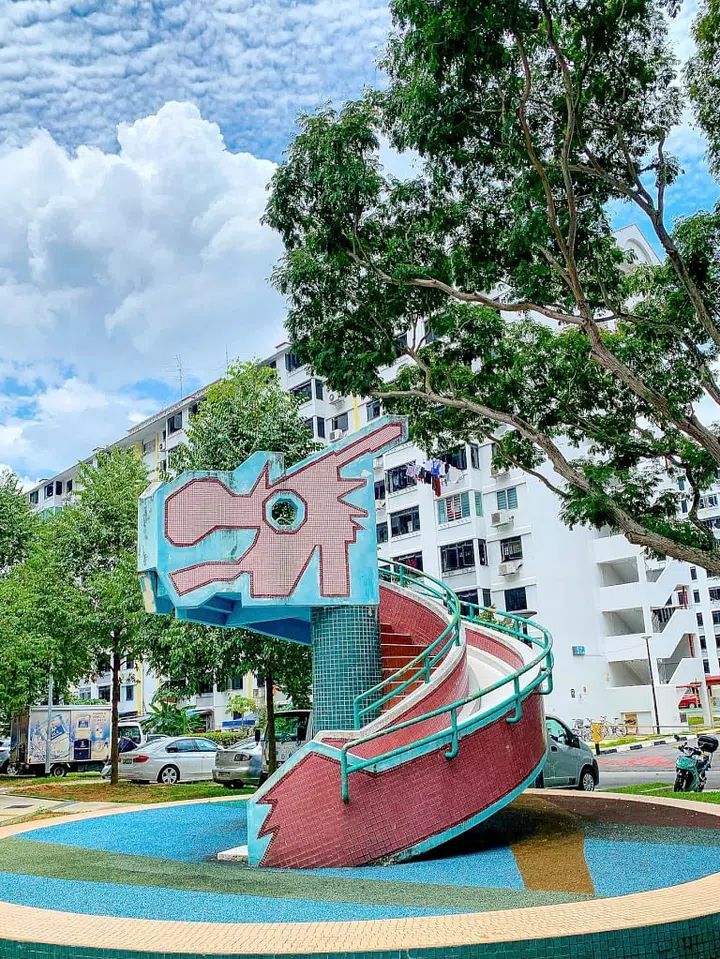
Red baby dragon playground at 54 Pipit Road, MacPherson, in Singapore.
HDB Resale Prices Nearby
The surrounding HDB resale market highlights a distinct pricing dichotomy between the estate’s older housing stock and its newer completions.
Older flats in MacPherson - predominantly 3-room and 4-room units built in the 1960s to 1980s along Circuit Road and Pipit Road - typically trade at deep lease-decay discounts, with older 4-room units commonly transacting in the $520,000 to $620,000 range.
In contrast, modern, recently MOP-ed developments nearby command substantial mature-estate premiums. Blocks in newer projects like MacPherson Residency and MacPherson Spring regularly see 4-room units changing hands above $1,000,000 to $1,150,000 (well over $1,000 to $1,100 psf).
While future sellers at Merpati Meadow will be subject to Plus model resale curbs - including the 10-year Minimum Occupation Period, 8% subsidy clawbacks, and buyer income ceilings that temper speculative run-ups - the strong benchmarks set by surrounding modern flats demonstrate persistent underlying buyer demand for fresh 99-year leases in this city-fringe pocket.

Feng Shui House Selection: How to Choose Best Feng Shui HDB BTO Unit?
Feng Shui Analysis
From an external landform and classical feng shui standpoint, the Merpati Meadow site exhibits both supportive environmental flows and a few distinct external features that warrant careful stack selection.
In classical landform feng shui, the nearby Pelton Canal acts as an external water conduit, where gentle, meandering paths assist in gathering Qi (energy), while straight canal segments require protective distance.
Entering Period 9, which governs the energetic cycle from 2024 through 2043, north-facing and south-facing orientations generally align best with prevailing spatial wealth and career stars, while also offering the practical advantage of avoiding direct east-west afternoon sun exposure.
Elevated spiritual energy
Conversely, the immediate presence of religious institutions - such as the nearby Catholic church compound and neighbourhood mosques - introduces elevated spiritual energy that classical masters often caution against facing head-on at close range.
When evaluating favorable versus compromised unit stacks on the site, orientation and external line-of-sight determine the hierarchy.
Good higher floor units
Favorable Merpati Meadow stacks will be higher-floor, predominantly north- or south-facing units that open out toward internal landscaped courtyard gardens or unblocked low-rise views along Jalan Anggerek, capturing unhindered ventilation without harsh direct glare or noise.
Less optimal stacks include lower-floor units directly overlooking the communal refuse chute chamber, electrical substations, or multi-storey car park access ramps, which introduce negative Qi (energy) and physical exhaust.
Furthermore, stacks with living room or master bedroom windows positioned directly opposite prominent roof corners of neighboring school blocks or religious buildings should be viewed with caution, as sharp architectural edges generate poison arrows that may require indoor screening or partition remediation during interior design.